Indonesian SIR CV 60 vs SIR 10 TSR Use Cases
Compare Indonesian SIR CV 60 vs SIR 10 TSR use cases to choose the right bale grade before you request an export quotation.
By Budi SantosoDirector of Rubber TradingTwelve years placing Indonesian TSR and RSS programmes with tire makers and industrial compounders across Asia, Europe, and North America.
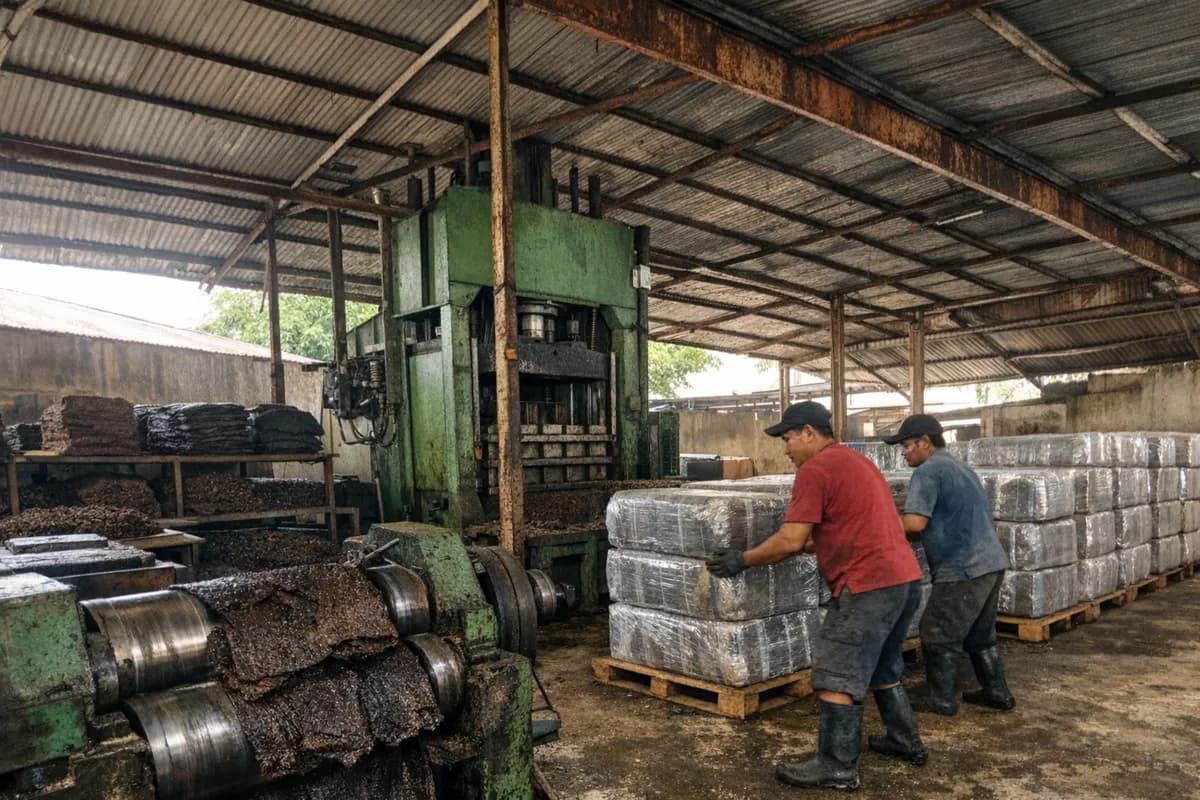
Indonesian SIR CV 60 and SIR 10 are both technically specified rubber bales under HS code 4001.22, but buyers do not normally use them for the same reason. SIR CV 60 is selected when the plant wants a constant-viscosity TSR for more controlled mixing. SIR 10 is selected when the buyer wants a cleaner TSR grade than SIR 20, but does not need to contract specifically on a constant-viscosity grade.
We supply both grades for export buyers who need Indonesian TSR bales for tire, industrial, moulded goods, or engineered rubber applications. This guide explains how to compare the two grades by use case, specification, order quantity, price basis, and purchase order wording.
What is the practical difference between Indonesian SIR CV 60 and SIR 10 TSR?
The practical difference is the buying purpose. SIR CV 60 is bought when the internal compound or mixing process calls for a constant-viscosity natural rubber, while SIR 10 is bought when the buyer needs a clean TSR grade with defined impurity limits and a standard SIR 10 material code.
For our SIR CV 60 Constant Viscosity TSR, the specification is dirt content ≤ 0.10% (w/w), ash content ≤ 0.75% (w/w), volatile matter ≤ 0.80% (w/w), PRI ≥ 60, Mooney viscosity ML (1+4) 100 °C of 60 ± 5 with constant viscosity, minimum order 19.6 MT or 1 × 20 ft FCL, 35 kg bales in shrink-wrapped pallet packing, scheduled production lead time of 3 to 4 weeks, certifications SNI 1903, ISO 9001, ISO 14001, and Halal from BPJPH, Incoterms FOB, CIF, and CFR, and HS code 4001.22.
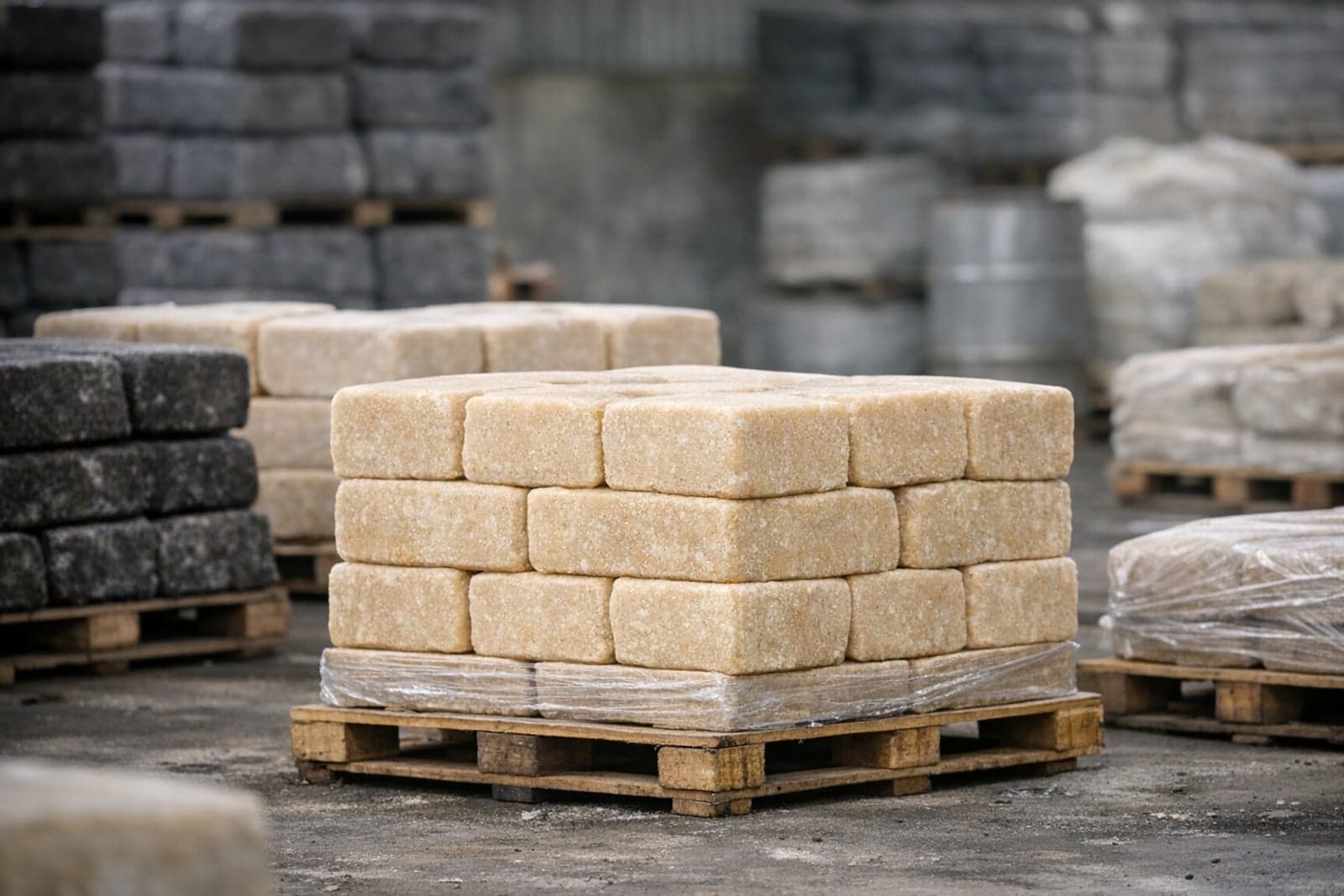
Featured product
SIR CV 60 Constant Viscosity TSR
Constant-viscosity Indonesian TSR with PRI at or above 60 and Mooney ML 60 plus or minus 5 for industrial mixing.
SNI 1903 · ISO 9001 · ISO 14001 · Halal (BPJPH)
View specificationsFor our SIR 10 Premium TSR, the specification is dirt content ≤ 0.10% (w/w), ash content ≤ 0.75% (w/w), volatile matter ≤ 0.80% (w/w), nitrogen ≤ 0.60% (w/w), PRI ≥ 50, Mooney viscosity ML (1+4) 100 °C of 61 ± 5, minimum order 19.6 MT or 1 × 20 ft FCL with 560 bales, 35 kg bales in shrink-wrapped pallet packing with 1,260 kg net weight per unit, lead time of 2 to 3 weeks FOB Jakarta or Belawan, certifications SNI 1903, ISO 9001, ISO 14001, ISO 45001, and Halal from BPJPH, Incoterms FOB, CIF, and CFR, and HS code 4001.22.
The two grades have the same dirt and ash limits in our offer, so the choice is not only about visible cleanliness. The stronger decision point is whether your factory needs the CV grade designation and the higher PRI level of SIR CV 60, or whether SIR 10 fits the material approval already used in your compound file.
If your purchasing team is still building the rubber grade shortlist, our TSR bale natural rubber category gives the wider Indonesian bale context before you request a grade-specific quotation.
Which use cases fit Indonesian SIR CV 60?
SIR CV 60 fits buyers who want Indonesian TSR with controlled Mooney behaviour for mixing, extrusion, calendering, moulding, or other industrial processes where viscosity variation creates production risk. It is most relevant when the plant specification names constant viscosity, not only a broad TSR grade.
In practical sourcing, SIR CV 60 is usually considered by teams that measure process stability lot by lot. If a mixer recipe, batch time, dump temperature, mill behaviour, or downstream forming step is sensitive to natural rubber viscosity, the buyer may prefer to contract on a constant-viscosity grade. That does not remove the need for receiving inspection, but it gives the technical team a clearer material target.
The higher PRI value in our CV 60 specification also matters to buyers who use PRI as a heat-ageing and process-resilience signal. PRI does not replace factory trials. It should sit beside Mooney viscosity, volatile matter, and the buyer’s own compound testing. For first approval, we suggest that the buyer’s technical team tests the grade in the actual recipe rather than approving it only from a certificate of analysis.
SIR CV 60 is also useful where automated weighing, tight batch records, or repeatable processing are part of the plant’s operating discipline. A plant that has already tuned production around a constant-viscosity rubber should be careful about substituting a non-CV grade only because the headline Mooney number looks close.
For the detailed grade page, review our SIR CV 60 Constant Viscosity TSR before sending your internal material code or trial requirement.
Which use cases fit Indonesian SIR 10 TSR?
SIR 10 fits buyers who need a cleaner TSR than workhorse lower-cost tire grades, but whose compound approval is written around SIR 10 rather than a constant-viscosity grade. It is a practical choice when impurity limits, bale format, and faster FOB timing carry more weight than the CV designation.
In many buying files, SIR 10 is treated as a middle path between higher-cleanliness light TSR grades and general tire-grade TSR. The grade can suit tire components, molded rubber goods, and industrial compounds where the buyer’s lab has already approved SIR 10 performance. The key is not the product name by itself. The purchase order should name the agreed limits and require the certificate of analysis to match the lot supplied.
SIR 10 can also be easier to fit into a procurement plan when the buyer needs shorter scheduling. Our SIR 10 lead time is 2 to 3 weeks FOB Jakarta or Belawan, compared with scheduled production of 3 to 4 weeks for SIR CV 60. If your plant has a shutdown window, a vessel booking deadline, or a safety-stock target, that timing can matter as much as the grade comparison.
A buyer should not assume SIR 10 is a direct substitute for SIR CV 60 without technical approval. If the compound file names CV rubber, switching to SIR 10 may require a mixing trial, Mooney check, compound rheology review, and finished-goods test. If the compound file already names SIR 10, then buying CV 60 may add specification control that the plant has not priced into the product design.
For a broader comparison that includes SIR 20, see our article on Indonesian SIR 10 vs SIR CV 60 vs SIR 20 TSR.
What is the MOQ and price basis for SIR CV 60 vs SIR 10?
Our minimum order for both SIR CV 60 and SIR 10 is 19.6 MT, equal to 1 × 20 ft FCL. Price depends on grade, shipment month, volume, Incoterm, packing, freight route, and the rubber market basis used at the time of quotation.
We do not publish a daily rubber price in a sourcing guide because it would be stale quickly. For TSR bales, buyers commonly compare offers against a live TSR market reference such as the SGX SICOM TSR 20 rubber futures benchmark published by Singapore Exchange, plus origin differential, grade differential, freight where relevant, and the seller’s shipment basis. The benchmark can help procurement compare timing, but it does not replace a firm physical quotation for Indonesian SIR CV 60 or SIR 10.
Incoterm changes the comparison. Under FOB, the buyer compares the Indonesia loading price and arranges the ocean freight. Under CFR, freight to the named destination port is included, but insurance is not. Under CIF, freight and insurance are included to the named destination port. A buyer comparing two offers should check whether both are on the same Incoterm before treating the numbers as equivalent.
Volume also changes the discussion. A one-container trial is normally priced and planned differently from a quarterly or annual shipment programme. CV 60 needs scheduled production, so the shipment month and forecast are more important than they are for a faster-moving grade. SIR 10 still needs allocation, but its 2 to 3 week FOB lead time gives buyers more room when the port plan is already active.
Send us your destination port, required Incoterm, shipment month, and target volume through our contact page for a current quotation on SIR CV 60 or SIR 10.
How should a buyer specify and order Indonesian TSR bales?
A buyer should specify the exact grade, origin, test limits, bale packing, Incoterm, loading port or destination port, shipment window, document requirements, and inspection process before issuing the purchase order. The PO should be written so procurement, QA, logistics, and receiving teams all identify the same cargo.
Start with the grade name exactly as approved in your plant. If the material master says SIR CV 60, do not shorten it to “SIR 60” or “TSR 60.” If the material master says SIR 10, do not write only “Indonesian TSR.” Loose naming creates disputes when a certificate of analysis arrives with a different grade description than the buyer expected.
Next, state the one or two values that are critical to your process. For CV 60, Mooney control and PRI are usually the technical focus. For SIR 10, dirt, ash, and the agreed Mooney range are usually checked first. The full product specification can sit in the contract or annex, but the PO line should still identify the grade clearly enough for production planning.
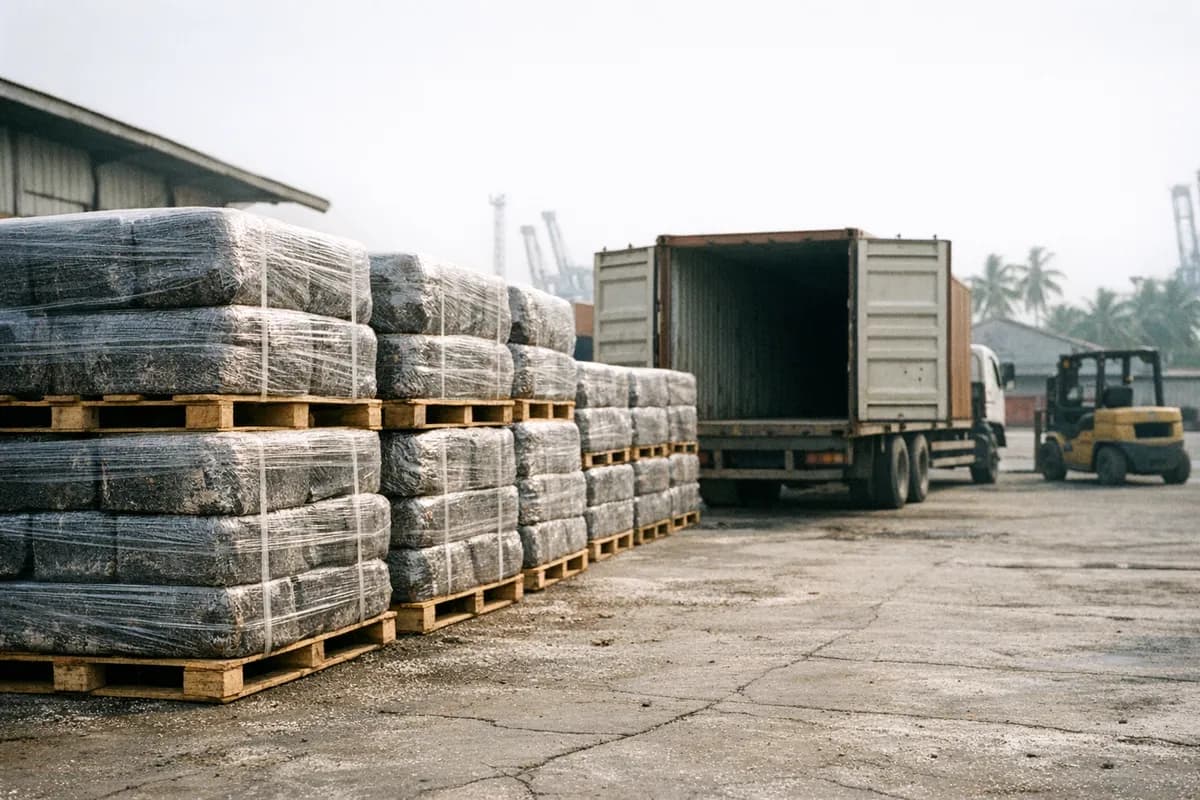
Packing should match your receiving system. Both grades are supplied as 35 kg bales, so the warehouse should be ready for bale handling, storage under dry conditions, seal checking, pallet or unit inspection, and lot segregation. Receiving teams should record container number, seal number, bale marks, external packaging condition, lot reference, and any visible damage before release to production.
Documents should be agreed before shipment. Buyers normally require a commercial invoice, packing list, bill of lading, certificate of analysis, certificate of origin if needed by the importing country, and any agreed quality or management-system documentation. If your bank, customs broker, or importer of record needs special wording, put that wording into the purchase order before the vessel is booked.
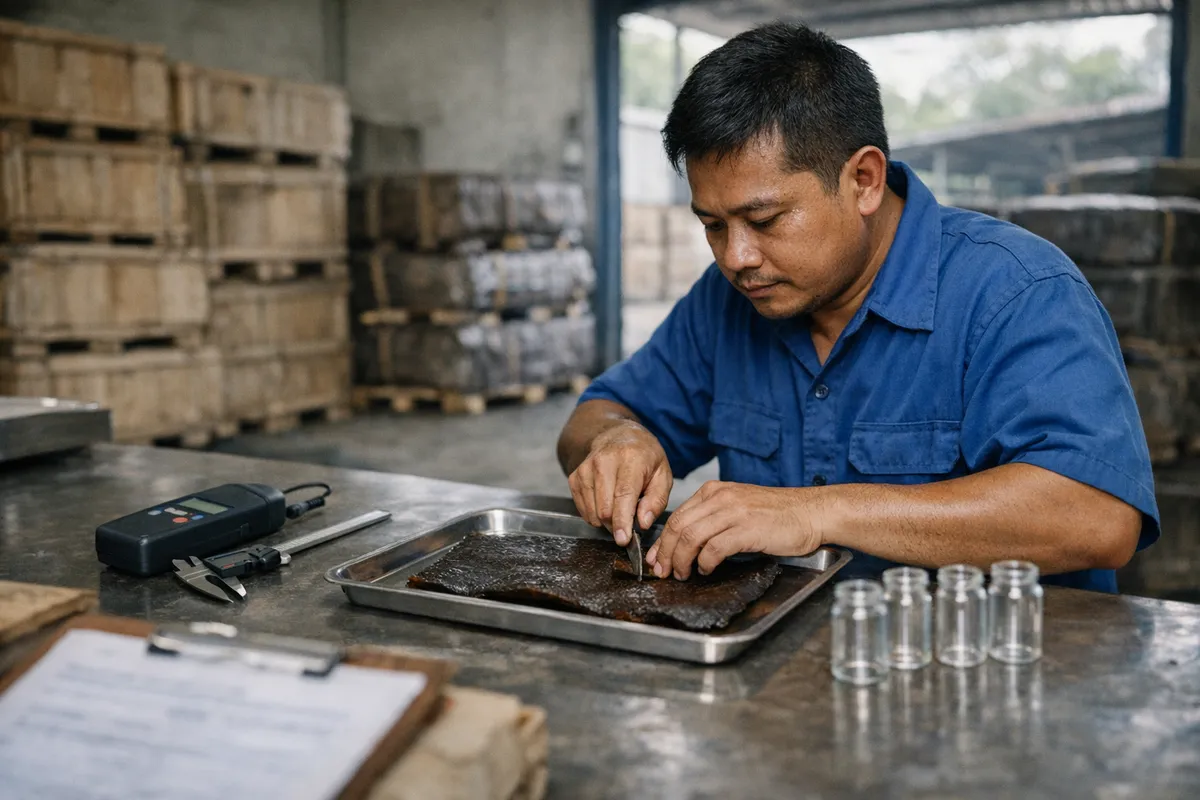
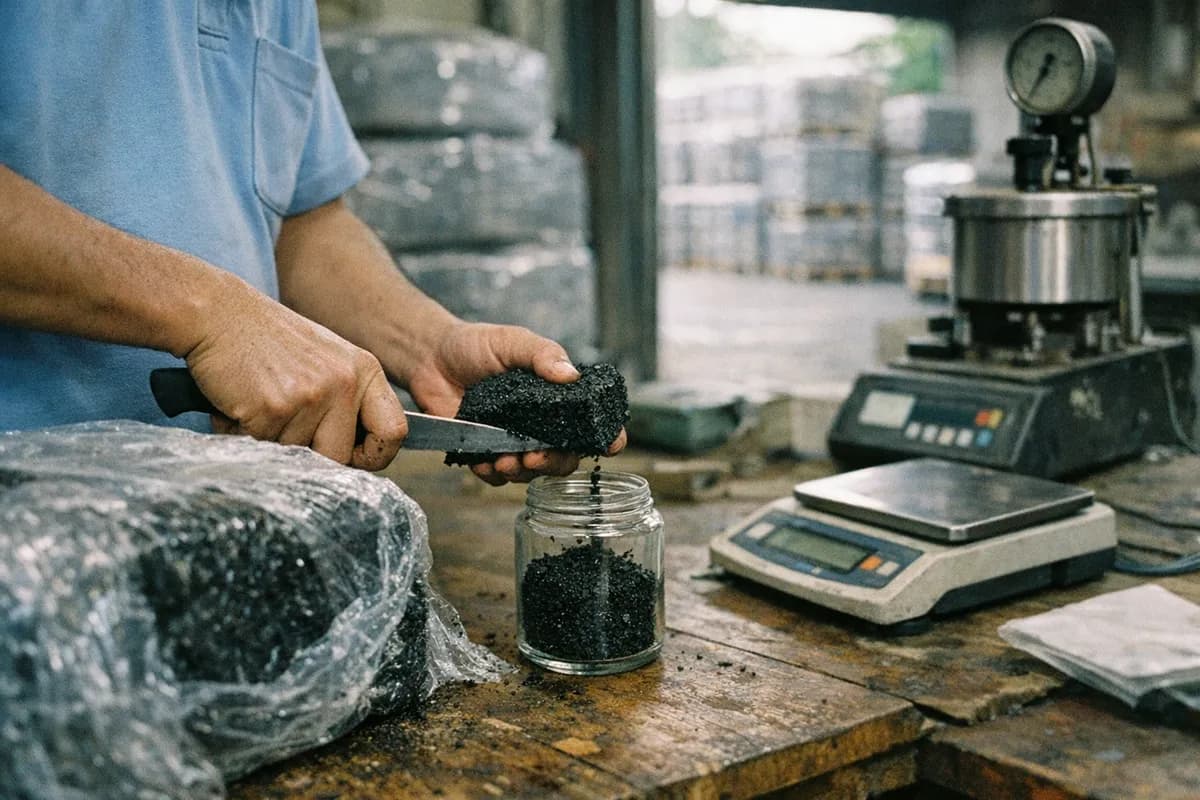
Sampling should connect the incoming bale lot to the certificate of analysis. The receiving sample should be labelled with supplier, grade, shipment date, container number, lot mark, sampling date, and sampler. If your plant runs approval trials, keep the trial batch separate until the lab result and production feedback are both cleared.
The final choice is simple, but it should be made by the technical and purchasing teams together. Choose SIR CV 60 when your process needs constant-viscosity control and the extra scheduling time is acceptable. Choose SIR 10 when your compound approval calls for SIR 10 and the commercial plan benefits from its FOB timing. If you want us to check fit against your current TSR specification, send the grade sheet and target shipment month through our contact page.