Indonesian SIR 20 TSR Sourcing Guide for Tire Makers
Use this SIR 20 TSR supplier Indonesia guide to qualify specs, samples, packing, FOB timing, and documents before ordering tire-grade TSR.
By Budi SantosoDirector of Rubber TradingTwelve years placing Indonesian TSR and RSS programmes with tire makers and industrial compounders across Asia, Europe, and North America.

SIR 20 is the routine technically specified rubber grade used by many tire compounders, but a safe purchase still depends on documents, lab values, bale handling, and shipment terms matching the offer. A low headline price is not useful if the Mooney band is unclear, the certificate of analysis is not lot-specific, or the packing does not fit your warehouse flow.
We supply Indonesian SIR 20 TSR as an export product for tire buyers, and we treat the purchase as a qualification process rather than a single quotation. This guide sets out how we recommend buyers evaluate an Indonesian SIR 20 TSR supplier, read the main lab values, test samples, check bales on arrival, and negotiate terms that can be verified before shipment.
Where can I buy SIR 20 TSR from Indonesia?
You can buy Indonesian SIR 20 TSR from exporters that can provide a grade specification, lot-based test documentation, export packing details, and shipping terms from an Indonesian port. We supply SIR 20 TSR Tire Grade for buyers who need a tire-grade Indonesian TSR bale with documented limits.
Featured product
SIR 20 TSR Tire Grade
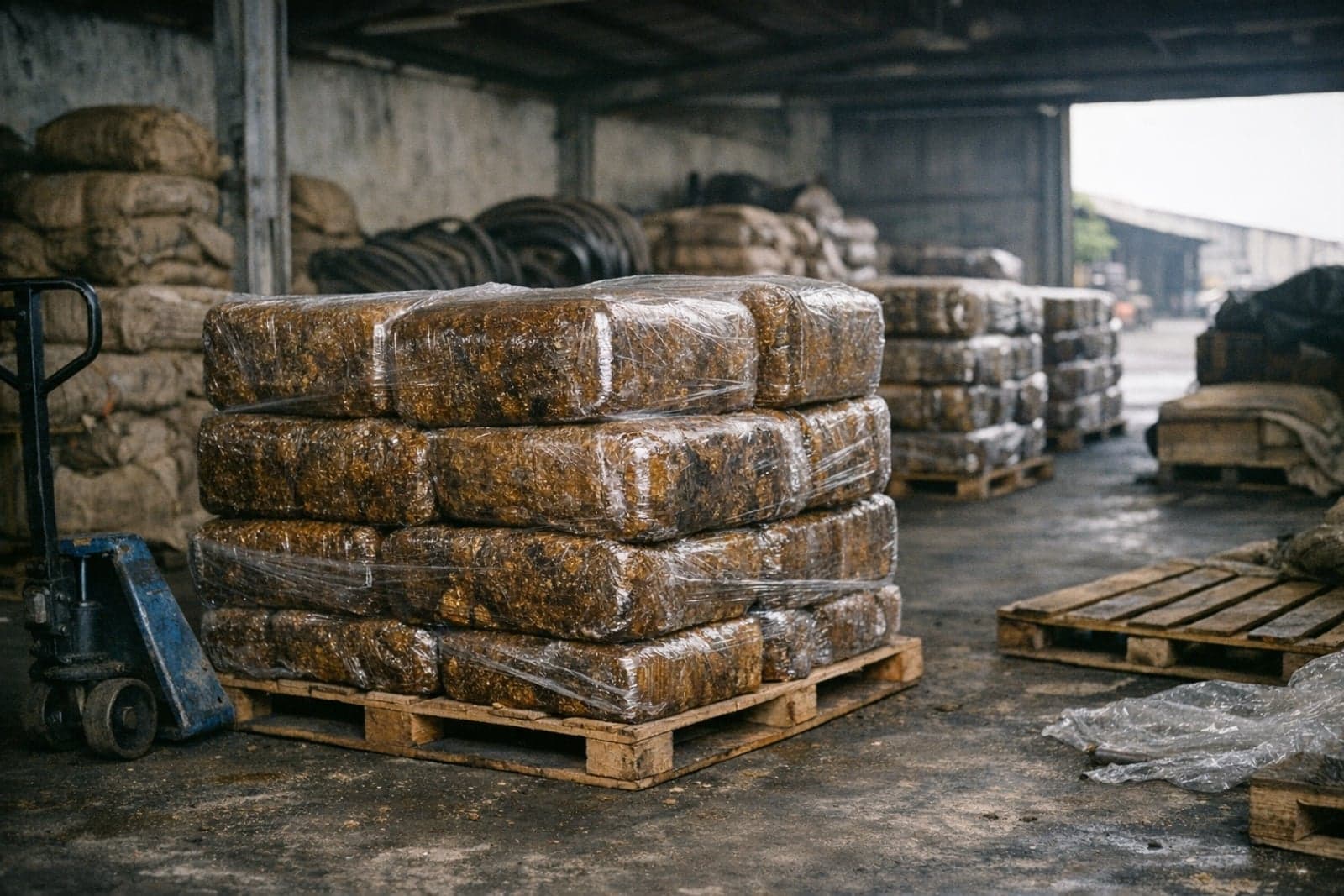
Workhorse Indonesian TSR bale with dirt at or below 0.16%, PRI at or above 50, Mooney ML 65 plus or minus 5.
SNI 1903 · ISO 9001 · ISO 14001 · ISO 45001 · Halal (BPJPH)
View specificationsFor our SIR 20 TSR, the specification is: dirt content ≤ 0.16% w/w, ash content ≤ 1.00% w/w, volatile matter ≤ 0.80% w/w, nitrogen ≤ 0.60% w/w, plasticity retention index (PRI) ≥ 50, and Mooney viscosity ML (1+4) 100 °C: 65 ± 5. The minimum order is 19.6 MT, equal to 1 × 20 ft FCL with 560 bales. Packing is 35 kg bales in shrink-wrapped pallet format, with 1,260 kg net weight per unit. Lead time is 2–3 weeks FOB Jakarta or Belawan. Available Incoterms are FOB, CIF, and CFR. The HS code is 4001.22. Certifications listed for this product are SNI 1903, ISO 9001, ISO 14001, ISO 45001, and Halal from BPJPH.
The first screening question should be simple: can the supplier connect the offer to a specification and a shipment document set? A supplier promise such as “tire grade” is not enough on its own. Ask for the product grade, bale weight, packing format, shipment port, Incoterm, lead time, and the certificate or test report format you will receive before shipment.
If your technical team wants to compare related tire-grade options, our tire grade TSR collection shows SIR 20 alongside other TSR grades used in passenger and light-truck compounds.
Which lab tests should I ask for before accepting SIR 20?
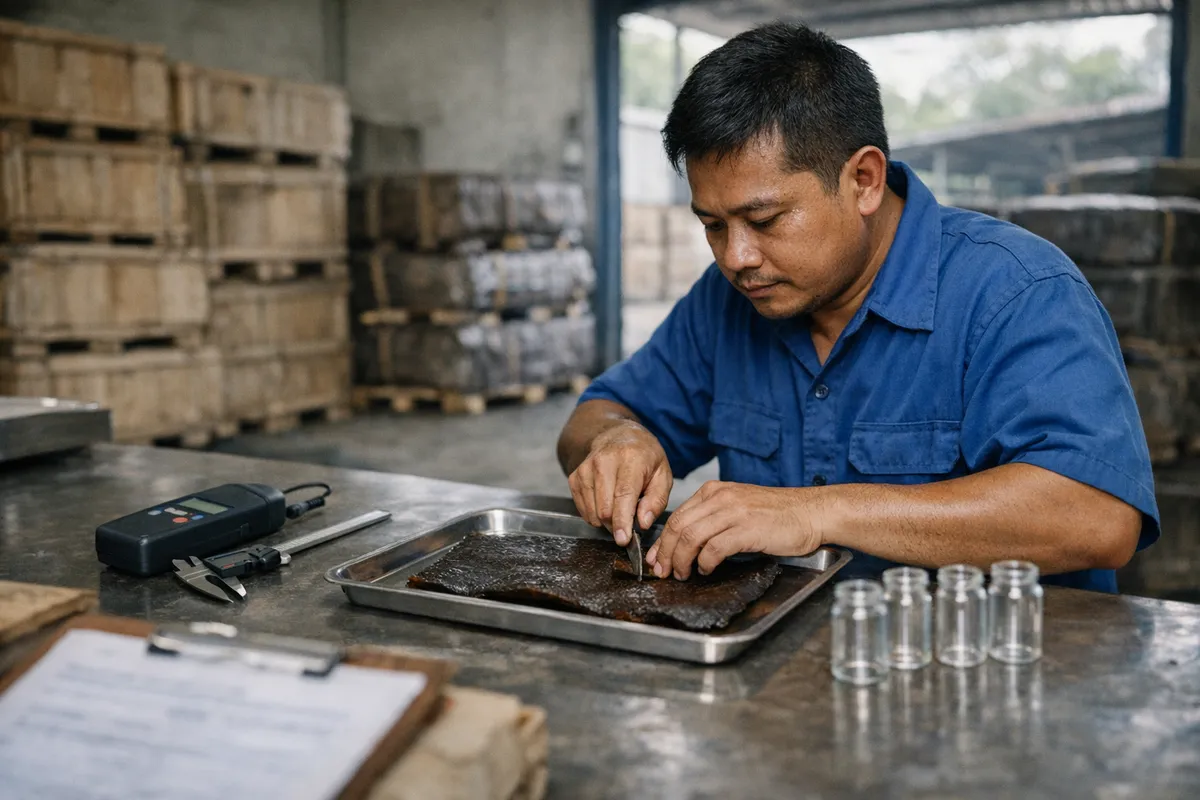
Ask for lab values that match the commercial specification: dirt, ash, volatile matter, nitrogen, PRI, and Mooney viscosity. For SIR 20 used in tire compounds, these figures tell your mixer and compound development team more than a visual inspection can.
Mooney viscosity should be read as a processing indicator, not as a purity test. In our SIR 20 offer, the Mooney value is ML (1+4) 100 °C: 65 ± 5. If your internal compound is tuned to a narrower intake range, state that during quotation rather than after the container is ready. A batch that passes a general grade limit may still require mixing adjustment if your plant runs tight viscosity windows.
PRI is a heat ageing resistance indicator. Our SIR 20 minimum is PRI ≥ 50. A buyer should check that the value is reported on the same lot offered for shipment, not copied from an older reference certificate. For tire plants, PRI is usually reviewed with volatile matter because wet or poorly dried material can affect handling and downstream consistency.
Dirt and ash are contamination indicators. Dirt content is a key TSR grade parameter because visible contamination can translate into defects in compound preparation. Ash content points to inorganic residue. Our SIR 20 limits are dirt ≤ 0.16% w/w and ash ≤ 1.00% w/w. If your plant has strict filtration or extrusion requirements, ask your technical team which value has caused rejections in the past, then put that value into the purchase specification.
Before accepting a shipment, request these items in one document pack:
- Product specification sheet that names SIR 20 and the test parameters.
- Lot-specific certificate of analysis or pre-shipment test report.
- Packing list showing bale weight and total bale count.
- Commercial invoice that matches the Incoterm and shipment quantity.
- Draft bill of lading details before final release.
Send us your required lab format and destination port through our contact page if you need a quotation that your technical and import teams can review together.
What are the minimum order quantities and price drivers for SIR 20 TSR exports?
Our minimum order for SIR 20 TSR is 19.6 MT, equal to 1 × 20 ft FCL with 560 bales. Price depends on grade, packing, Incoterm, shipment volume, production timing, and the reference structure used in the offer.
For export negotiations, avoid asking only for “best price.” Ask what the price is based on. Many TSR offers are built from a terminal or published rubber benchmark, an origin differential, and export logistics. For natural rubber TSR, buyers commonly track SGX SICOM TSR 20 futures as a benchmark published by Singapore Exchange, then compare the supplier’s origin differential and freight component. We do not quote a spot price in this guide because it would be stale by the time a buyer reads it.
Incoterm changes the cost structure. FOB Jakarta or Belawan keeps ocean freight and insurance under the buyer’s control. CFR adds freight to the destination port but leaves insurance to the buyer. CIF includes freight and insurance in the seller’s quotation. If your company has annual freight contracts, FOB may be easier to compare across suppliers. If your import team prefers landed planning, CIF can reduce the number of moving parts, but you should still ask for the freight assumption and shipment window.
Volume also matters. A single FCL is the normal starting point for export handling. Larger programs should be quoted by shipment schedule, not only by total annual quantity. A monthly call-off plan lets both sides align production, vessel space, and documentation.
If you are comparing Indonesian SIR 20 offers across suppliers, use our SIR 20 grade page as a reference point for the grade positioning, then ask for a current quotation for your port and Incoterm.
What packaging and palletisation is standard for Indonesian TSR bales?
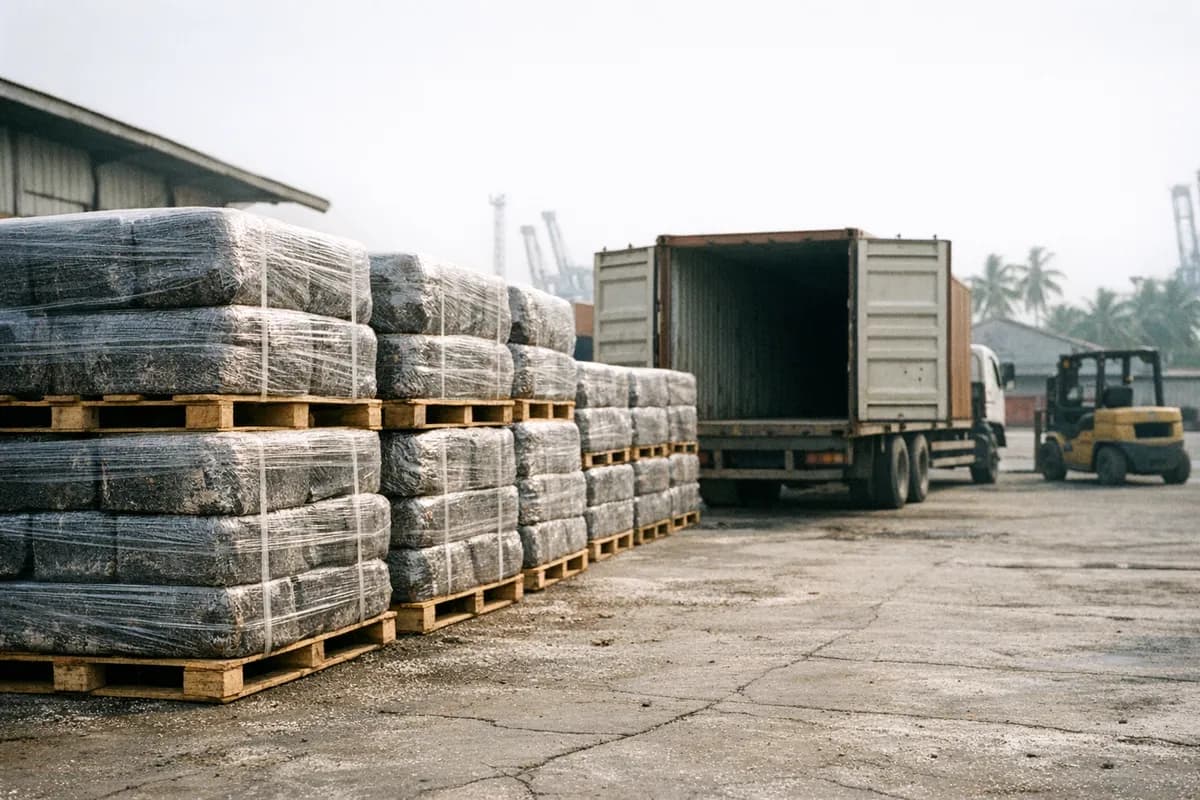
For our SIR 20 TSR, export packing is 35 kg bales in shrink-wrapped pallet format, with 1,260 kg net weight per unit. This format is designed for FCL movement and warehouse handling by forklift or pallet truck where the receiving plant is set up for bale rubber.
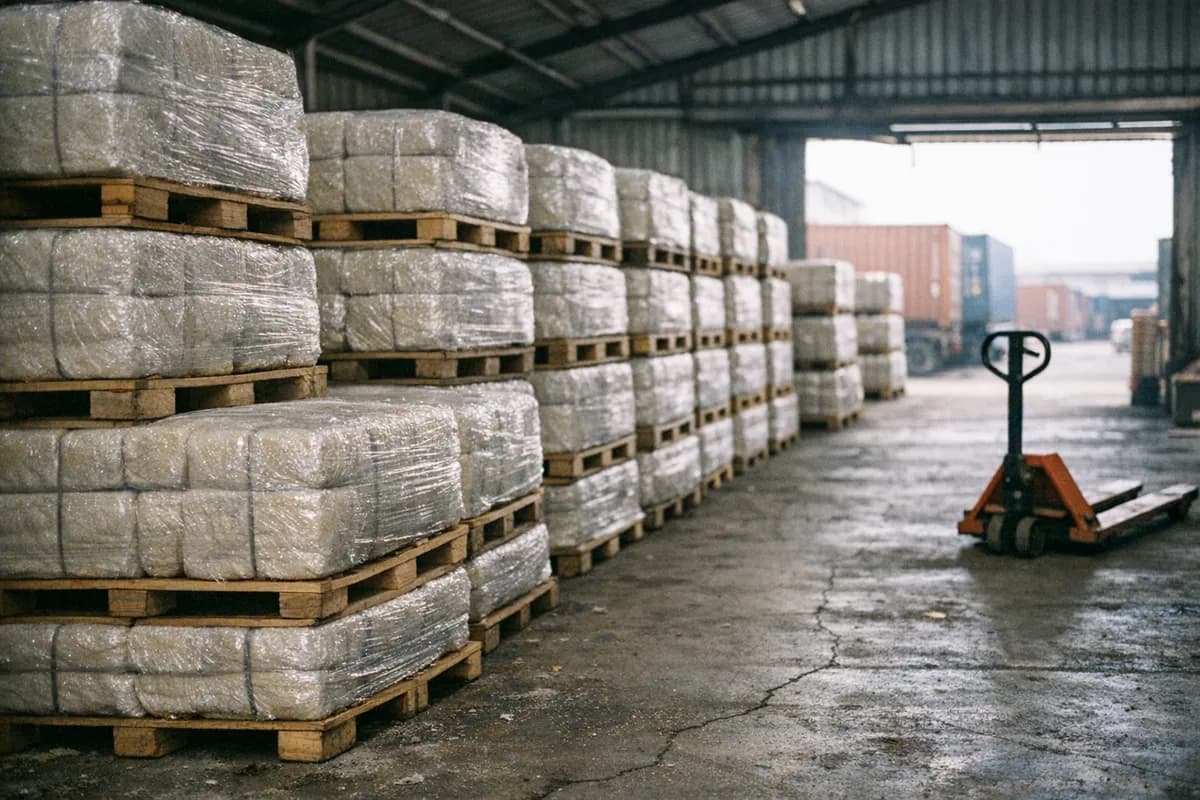
Your packing review should cover three practical points before you issue a purchase order. First, confirm bale weight, because receiving teams often plan labour and storage positions around bale count. Second, confirm the pallet or unit load format, because shrink-wrapped units need a clean unloading area and correct fork handling. Third, confirm label information, because your warehouse will need to connect the physical rubber to the shipment documents and the certificate of analysis.
On arrival, inspect the container before unloading. Record the container number and seal number against the bill of lading. Check for water marks, torn wrapping, loose bales, odour, oil stains, or deformation from load shift. Photograph any exception before the cargo is moved. If the container floor is wet or the bale wrapping is damaged, separate the affected units and notify the seller and insurer according to your company’s claim procedure.
After unloading, reconcile the physical count with the packing list. For our MOQ shipment, that means checking the 560-bale count against the documents. Do not cut bales for production before your receiving inspection is complete. If your plant performs incoming QC, draw samples under your internal procedure and keep a retained sample with the lot number and receiving date.
For buyers comparing bale rubber formats across grades, our TSR bale natural rubber page groups the TSR bale products separately from RSS sheet and latex concentrate.
How long is the FOB lead time from Jakarta or Belawan?
Our lead time for SIR 20 TSR is 2–3 weeks FOB Jakarta or Belawan. That timing should be counted from the point where commercial terms, quantity, packing, documents, and payment conditions are agreed, not from the first inquiry email.
A practical sourcing timeline has four checkpoints. The first is technical confirmation: grade, test limits, packing, and sample requirements. The second is commercial confirmation: price basis, Incoterm, port, shipment window, and payment terms. The third is production and pre-shipment documentation. The fourth is vessel booking, container loading, and final shipping documents.
Jakarta and Belawan serve different routing needs. A buyer should choose the port based on supplier allocation, vessel connection, freight cost, and destination service. If your factory has a fixed monthly production plan, tell the supplier your latest acceptable ETA at destination, not only the desired FOB week. FOB timing and arrival timing are not the same thing.
Sample approval can add time if it is not planned early. If your company requires internal mixing trials, ask for the sample before negotiating the final shipment date. If your plant only requires a document review, state exactly which test report format is acceptable so the supplier does not prepare documents that your QA team later rejects.
What commercial terms should a tire maker request from an Indonesian TSR supplier?
Request terms that convert the supplier’s promise into checkable documents. For SIR 20 TSR, the purchase file should connect the offer, specification, certificate of analysis, packing list, invoice, and bill of lading without conflicting grade names, weights, or shipment terms.
Use this decision matrix during supplier qualification:
Supplier says “SIR 20 tire grade.” Verify it with a written specification showing dirt, ash, volatile matter, nitrogen, PRI, and Mooney viscosity. Reject vague grade descriptions that do not include lab limits.
Supplier says “standard export packing.” Verify bale weight, pallet format, net weight per unit, and total bale count. Your warehouse team should be able to plan unloading before the container arrives.
Supplier says “ready in two weeks.” Verify the Incoterm, port, payment trigger, document readiness, and vessel booking plan. Lead time is only meaningful when tied to the shipment port and the date from which the clock starts.
Supplier says “certified.” Verify which certificate applies to the product and the company system. For our SIR 20 TSR, the listed certifications are SNI 1903, ISO 9001, ISO 14001, ISO 45001, and Halal from BPJPH.
Supplier says “competitive price.” Verify the price basis, benchmark reference, origin differential, Incoterm, freight inclusion, validity date, and currency. A price without validity is not a procurement decision, it is a conversation starter.
The strongest supplier file is boring in a good way: the same grade name appears everywhere, the weights reconcile, the lab values match the agreed specification, and the shipment term is clear. If you want us to prepare an Indonesian SIR 20 TSR offer in that format, send your destination port, Incoterm preference, and monthly volume through our contact page.