Indonesian SIR 10 vs SIR CV 60 vs SIR 20 TSR
Compare SIR 10 vs SIR CV 60 vs SIR 20 TSR Indonesia so your tyre team can match Mooney control and lead time to each component.
By Budi SantosoDirector of Rubber TradingTwelve years placing Indonesian TSR and RSS programmes with tire makers and industrial compounders across Asia, Europe, and North America.
SIR 10, SIR CV 60 and SIR 20 are all Indonesian technically specified rubber grades, but they do not solve the same purchasing problem. For a tyre compounder, the choice is not only about dirt limits. It also affects Mooney control, mixing adjustment, extrusion behaviour, production scheduling and how much qualification work your technical team must do before changing a recipe.
We supply these grades as export TSR bales from Indonesia, and we treat the comparison as both a technical and commercial decision. A grade that looks close on paper can still change mill behaviour, compound viscosity or component uniformity if the plant is tuned tightly around one incoming rubber profile.
What is the difference between Indonesian SIR 10, SIR CV 60 and SIR 20 TSR?
The main differences are cleanliness limits, PRI level, Mooney target and production planning. SIR 20 is the routine tyre-grade TSR, SIR 10 gives tighter dirt and ash limits, and SIR CV 60 is selected where constant viscosity is more important than buying the standard workhorse grade.
| Field | SIR 10 Premium TSR | SIR CV 60 Constant Viscosity TSR | SIR 20 TSR Tire Grade |
|---|---|---|---|
| Product page | SIR 10 Premium TSR | SIR CV 60 Constant Viscosity TSR | SIR 20 TSR Tire Grade |
| Dirt content | ≤ 0.10% w/w | ≤ 0.10% w/w | ≤ 0.16% w/w |
| Ash content | ≤ 0.75% w/w | ≤ 0.75% w/w | ≤ 1.00% w/w |
| Volatile matter | ≤ 0.80% w/w | ≤ 0.80% w/w | ≤ 0.80% w/w |
| Nitrogen | ≤ 0.60% w/w | Not stated in our product facts | ≤ 0.60% w/w |
| PRI | ≥ 50 | ≥ 60 | ≥ 50 |
| Mooney viscosity | ML (1+4) 100 °C: 61 ± 5 | ML (1+4) 100 °C: 60 ± 5, constant viscosity | ML (1+4) 100 °C: 65 ± 5 |
| Minimum order | 19.6 MT, 1 x 20 ft FCL, 560 bales | 19.6 MT, 1 x 20 ft FCL | 19.6 MT, 1 x 20 ft FCL, 560 bales |
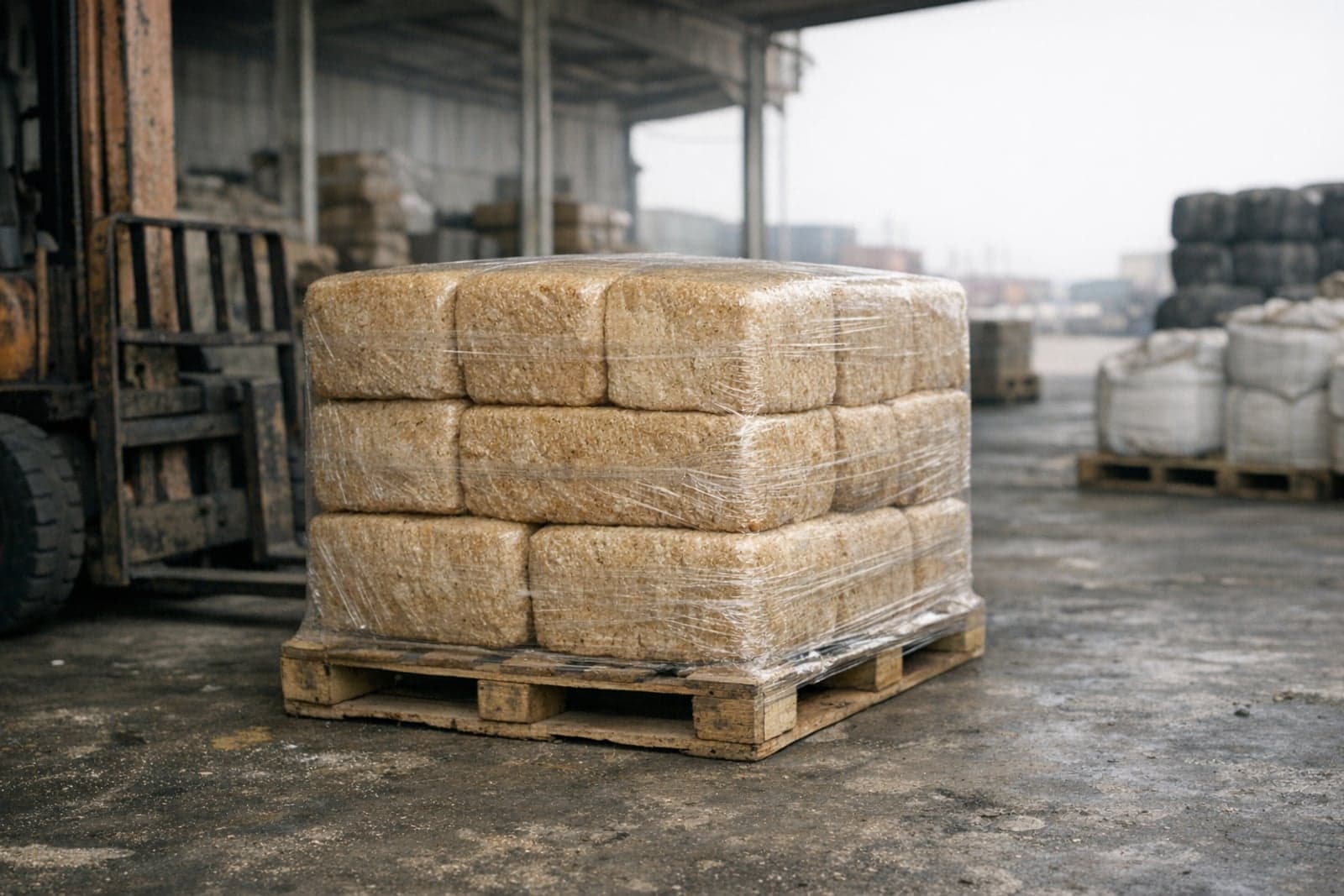
| Packaging | 35 kg bales, shrink-wrapped pallet, 1,260 kg net weight per unit | 35 kg bales, shrink-wrapped pallet | 35 kg bales, shrink-wrapped pallet, 1,260 kg net weight per unit |
| Lead time | 2 to 3 weeks FOB Jakarta or Belawan | 3 to 4 weeks, scheduled production | 2 to 3 weeks FOB Jakarta or Belawan |
| Certifications | SNI 1903, ISO 9001, ISO 14001, ISO 45001, Halal from BPJPH | SNI 1903, ISO 9001, ISO 14001, Halal from BPJPH | SNI 1903, ISO 9001, ISO 14001, ISO 45001, Halal from BPJPH |
| Incoterms | FOB, CIF, CFR | FOB, CIF, CFR | FOB, CIF, CFR |
| HS code | 4001.22 | 4001.22 | 4001.22 |
Featured product
SIR 10 Premium TSR
Premium Indonesian TSR with dirt at or below 0.10%, ash at or below 0.75%, Mooney ML 61 plus or minus 5.
SNI 1903 · ISO 9001 · ISO 14001 · ISO 45001 · Halal (BPJPH)
View specificationsFor buyers, the table should be read in order of risk. If your plant has had contamination-related rejections, compare dirt and ash first. If your mixer settings are sensitive to incoming viscosity, compare Mooney and the CV requirement. If your production plan is fixed, compare lead time before approving a substitution.
Our SIR 10 grade page, SIR CV grade page and SIR 20 grade page separate these options by grade family for buyers building an approved vendor file.
How do Mooney viscosity and PRI affect tyre mixing?
Mooney viscosity affects how the rubber breaks down and mixes under your plant conditions. PRI is a heat-ageing resistance indicator, so it is usually reviewed with compound performance targets and processing stability rather than treated as a simple buying label.
In practical mixing terms, a higher or lower incoming Mooney can shift the work your internal mixer or open mill must do before the compound reaches the target dump condition. Our SIR 20 sits at ML 65 ± 5, while SIR 10 and SIR CV 60 sit close to the 60 range. If your masterbatch recipe was tuned on SIR 20, changing to a lower Mooney grade can alter ram pressure, energy input or mixing time. The change may be manageable, but it should be tested rather than assumed.
Constant viscosity matters when variation costs more than the rubber differential. With SIR CV 60, the purpose is to keep intake viscosity in a controlled band so the mixing line sees less lot-to-lot adjustment. That can help plants running automated weighing, fixed cycle recipes or extrusion lines where compound viscosity affects die swell and gauge control.
PRI matters because tyre compounds see heat during mixing, processing and service. Our SIR CV 60 has a higher PRI minimum than the other two grades. That does not mean it automatically produces a better tyre in every recipe. It means your technical team has a stronger starting point if ageing resistance and processing repeatability are part of the qualification target.
If you want a current specification sheet before running a trial, send your required grade and destination port through our contact page, and we will prepare the quotation around the grade you intend to test.
Which SIR grade is best for tyre treads, carcass and sidewall?
For many tyre plants, SIR 20 is the baseline grade for general tyre compounds, SIR 10 is chosen when lower dirt and ash are worth paying for, and SIR CV 60 is chosen when stable processing is the priority. The best grade depends on the component and the plant’s tolerance for viscosity variation.
For tread compounds, start with the recipe’s performance target. Tread wear, rolling resistance and traction are driven by the full compound system: polymer blend, filler, oil, curing package and processing history. Rubber grade still matters because dirt, ash, viscosity and PRI influence how consistently that system is prepared. SIR 10 can be a good candidate where the compounder wants tighter cleanliness than SIR 20. SIR 20 remains the practical workhorse where the recipe is already qualified around that profile.
For carcass and skim compounds, uniform processing often matters as much as headline cleanliness. Gauge consistency, calendering behaviour and adhesion-related processing windows can be affected when incoming viscosity moves. SIR CV 60 should be considered when a plant wants to reduce lot adjustment and keep compound viscosity closer from shipment to shipment.
For sidewall compounds, extrusion behaviour is often the buying concern. If die swell, surface finish or dimensional control is sensitive in your plant, SIR CV 60 deserves a trial. If your line is already qualified on SIR 20 and your compound tolerates its Mooney band, the simpler commercial choice may be to keep SIR 20 and control the incoming lots through test documentation.
Buyers comparing tyre-grade TSR options can also review our tire grade TSR collection, which groups SIR 10 and SIR 20 for passenger and light-truck compound discussions.
Do SIR 10 and SIR CV 60 have different lead times or MOQ from SIR 20?
The MOQ is the same for all three grades at 19.6 MT, equal to 1 x 20 ft FCL. Lead time differs: our SIR 10 and SIR 20 are 2 to 3 weeks FOB Jakarta or Belawan, while SIR CV 60 is 3 to 4 weeks because it is scheduled production.
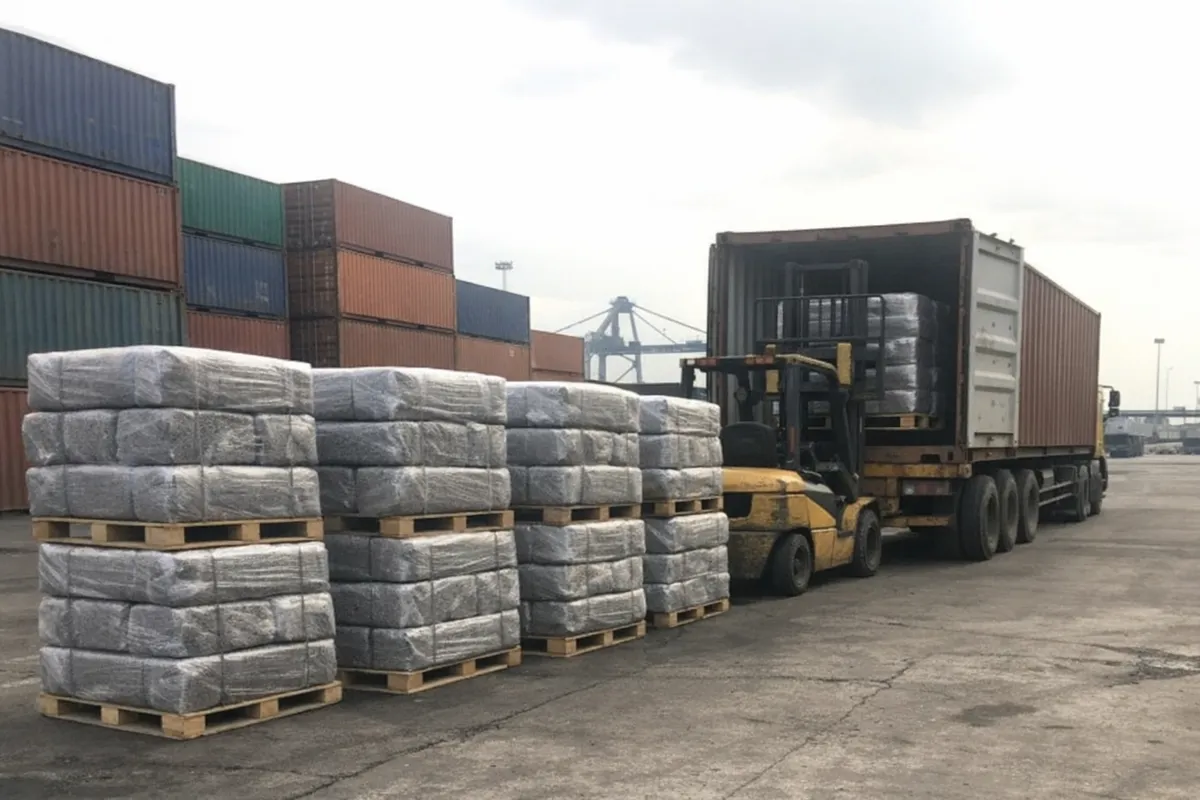
That extra planning time for SIR CV 60 matters if your plant runs monthly call-offs. A buyer should not treat CV material as a last-minute substitute unless the shipment window has already been discussed. For tyre plants, the safer method is to schedule CV trials separately from routine SIR 20 shipments, then decide whether the benefit in processing stability justifies a standing program.
Price should be requested as a current quotation, not taken from a guide like this. The main price drivers are grade, packing, Incoterm, shipment volume, season and production timing. Many TSR offers reference SGX SICOM TSR 20 futures published by Singapore Exchange, then add an origin differential and the relevant logistics component. We do not quote spot prices because they move and would be stale after publication.
Incoterm changes the comparison. FOB lets your import team control ocean freight. CFR includes freight to the named destination port. CIF adds insurance as well. When comparing SIR 10, SIR CV 60 and SIR 20, ask each supplier to quote the same Incoterm and port, otherwise the grade premium can be hidden inside freight assumptions.
Can SIR CV 60 substitute for SIR 20 in a compound?
SIR CV 60 can be trialled as a substitute for SIR 20, but it should not be dropped into a qualified tyre compound without internal testing. The Mooney target is lower and controlled differently, and the PRI minimum is higher, so your mixing and compound properties may shift.
The first check is processing. Run the candidate CV material against your current SIR 20 control batch and compare mixer power, dump temperature, batch viscosity, extrusion or calendering behaviour, and cured compound test results. If your plant controls compound Mooney after mixing, that number should be compared at the same test condition for both lots.
The second check is component performance. For tread, do not assume lower viscosity improves rolling resistance or wear. Those outcomes depend on the whole formulation and curing system. For carcass or sidewall, the benefit may appear as steadier processing rather than a dramatic cured-property change.
The third check is purchasing continuity. If the trial succeeds, confirm whether your production plan can accept the longer scheduled lead time. A technical approval without a call-off plan can still create a supply problem.
How should a tyre buyer choose and request samples?
Choose the grade by matching the technical risk to the commercial constraint: SIR 20 for established tyre-grade TSR programs, SIR 10 for tighter cleanliness, and SIR CV 60 for constant-viscosity control. Then request samples and documents in a format your lab can compare without changing too many variables at once.
A practical decision checklist is short:
- Confirm the target component: tread, carcass, sidewall or a shared masterbatch.
- State the current approved grade and the problem you are trying to solve, such as dirt limit, Mooney variation, extrusion stability or lead-time planning.
- Request the candidate grade sample with its matching specification sheet and lot reference.
- Run the trial against your existing control material under the same mixing cycle.
- Compare processing data before making a price-only decision.
- Ask for the same Incoterm, shipment port and FCL quantity when requesting commercial offers.
For a first qualification round, we normally recommend testing no more than two candidate grades against your control grade. If your plant already uses SIR 20 and wants cleaner intake rubber, compare SIR 10 first. If your issue is variable processing, compare SIR CV 60 first. If your purchase team is building a standard Indonesian TSR program from zero, start with SIR 20 as the baseline and add SIR 10 or SIR CV 60 only when the technical case is clear.
Send your target component, current grade, destination port and required trial quantity through our contact page. We will align the sample request and quotation with the grade your technical team actually needs to evaluate.