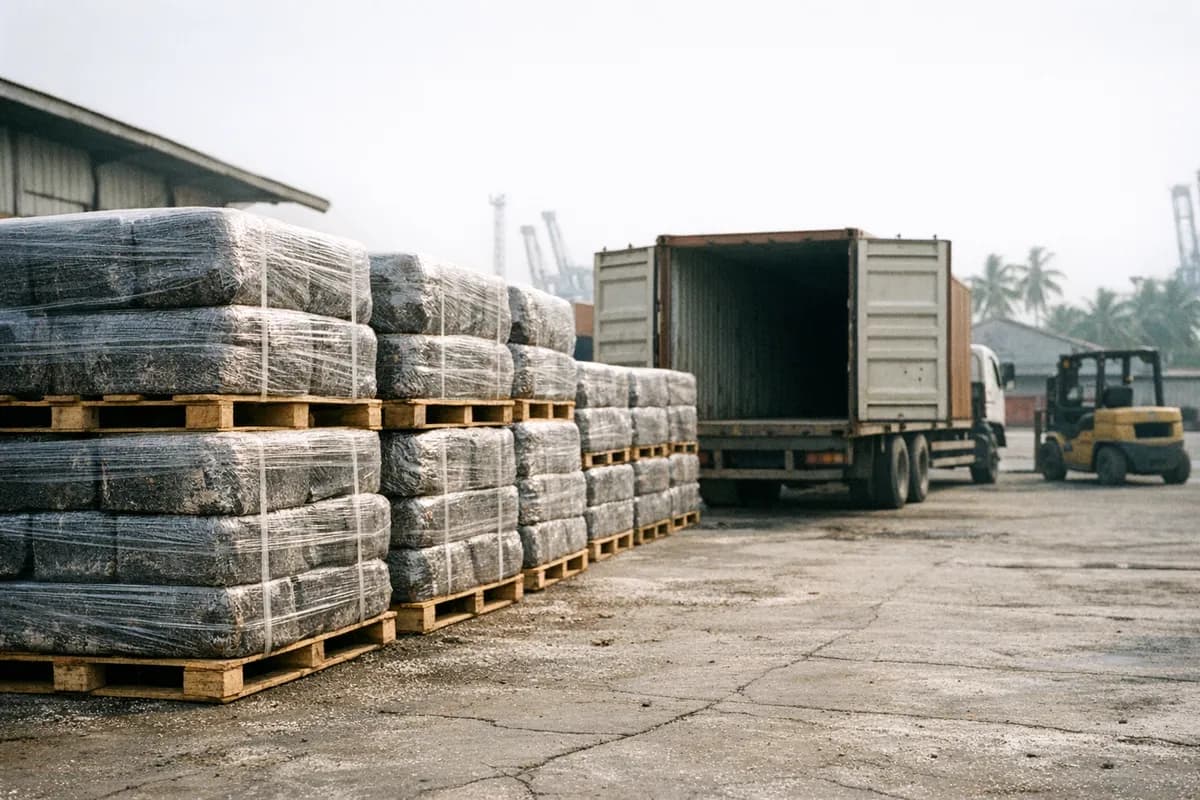
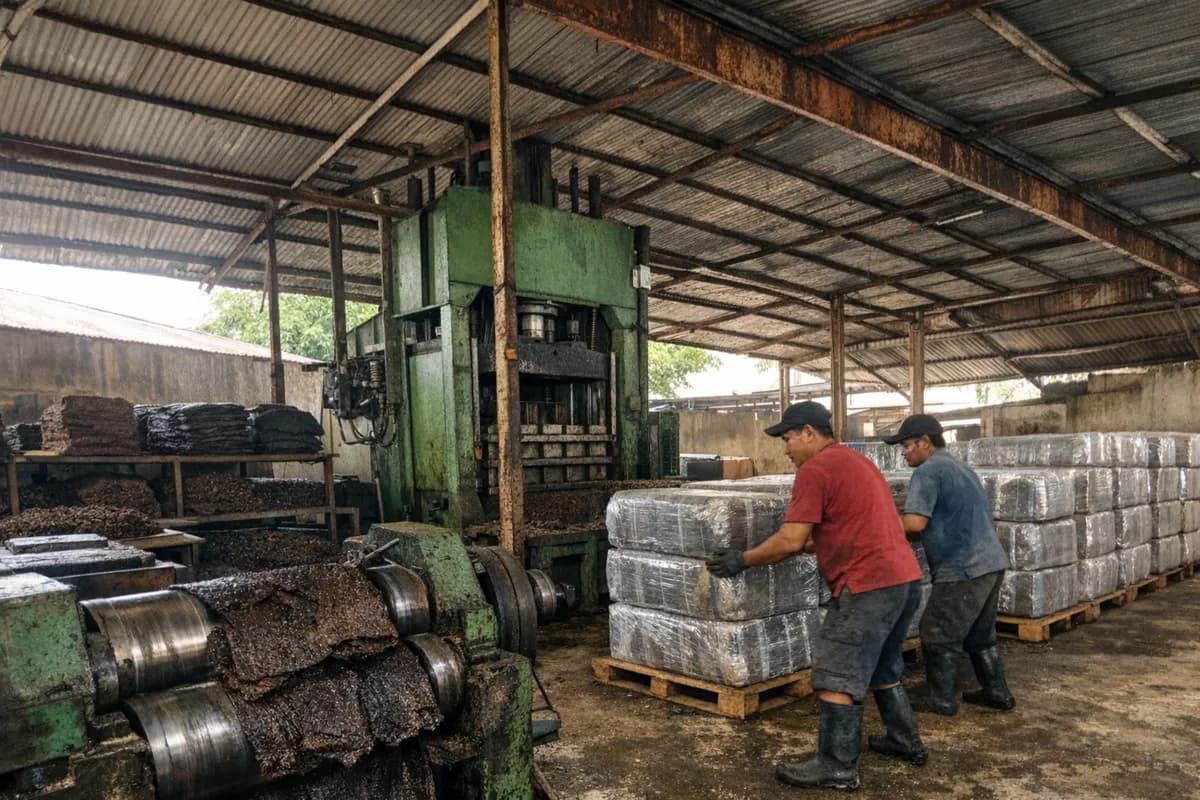
EUDR Readiness for Indonesian Rubber to the EU
EUDR readiness for Indonesian rubber to the EU requires plot data, legality evidence, and clear PO terms before buyers request a quote.
By Budi SantosoDirector of Rubber TradingTwelve years placing Indonesian TSR and RSS programmes with tire makers and industrial compounders across Asia, Europe, and North America.
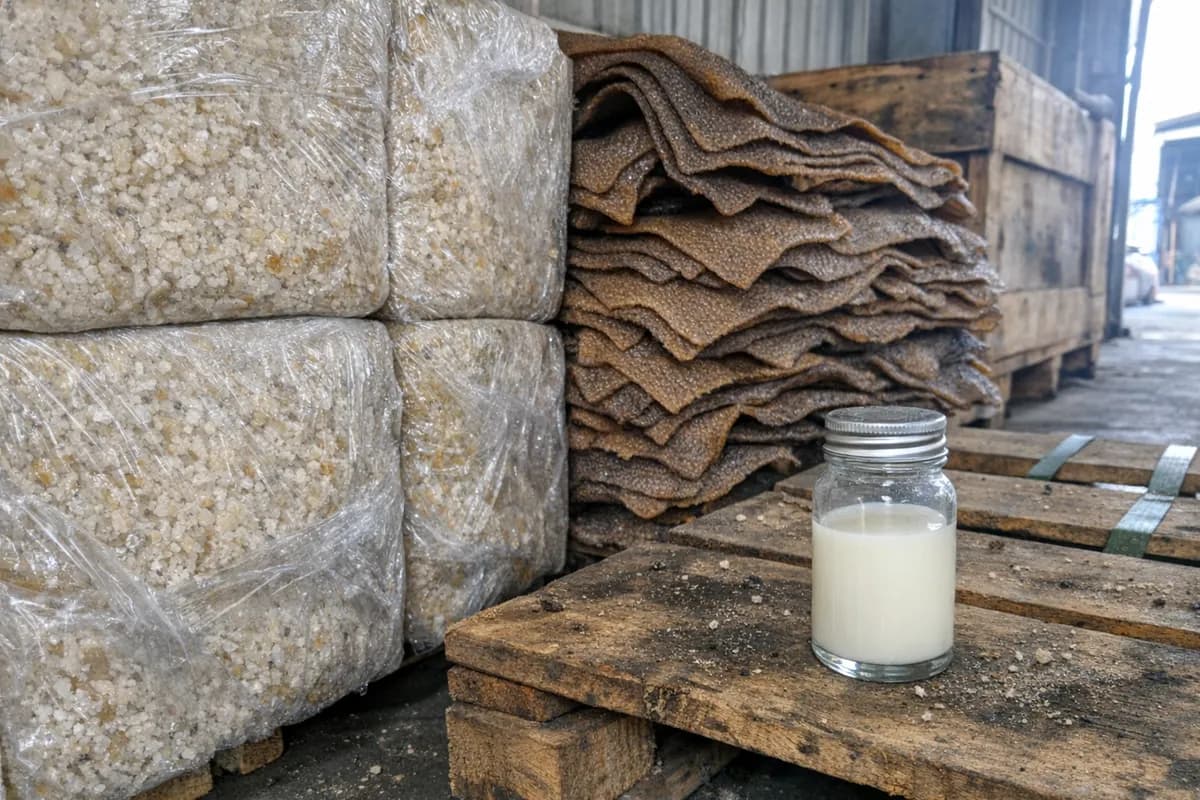
EUDR readiness for Indonesian rubber to the EU is not a certificate request. It is a data, traceability, and purchasing-control issue that has to be settled before the EU operator places the product on the EU market.
We supply Indonesian natural rubber grades used by EU manufacturers, importers, and compounders, including TSR bales, RSS smoked sheet, and HA latex concentrate. This guide explains how a buyer should evaluate EUDR scope, what data to ask for, how to specify the rubber grade, and how to write an order file that supports the EU operator’s due diligence process.
What does EUDR change for Indonesian rubber entering the EU?
EUDR changes the buying file from a normal quality-and-shipment file into a traceability file linked to land, legality, and a due diligence statement. The EU importer or operator must have enough evidence before the product is placed on the EU market.
Regulation (EU) 2023/1115 Article 3 says relevant commodities and relevant products may be placed on the EU market, made available on the EU market, or exported only if they are deforestation-free, produced in accordance with the relevant legislation of the country of production, and covered by a due diligence statement. For rubber, that means the purchase discussion cannot stop at grade, Mooney, dirt, packing, and price.
The timing also matters for contract planning. Regulation (EU) 2025/2650 amending Regulation (EU) 2023/1115 sets the main application date at 30 December 2026, with 30 June 2027 for micro and small undertakings. Buyers should confirm which EU entity is the operator, which entity is the trader if applicable, and who will submit or reference the due diligence statement in the EU Information System.
The EUDR cutoff is fixed. Regulation (EU) 2023/1115 Article 2 defines deforestation-free in relation to relevant commodities produced on land that has not been subject to deforestation after 31 December 2020. A buyer sourcing Indonesian rubber for EU use should therefore ask how the supplier file connects the rubber lot to production plots and how the cutoff date is addressed.
For our export desk, the practical sequence is simple: identify the rubber product and HS code, confirm EUDR scope, agree the quality specification, define the traceability evidence needed by the EU operator, then quote the shipment term and timing. Reversing that order often creates delays because a price can be issued faster than an EUDR file can be checked.
Which Indonesian rubber products are in scope?
Indonesian natural rubber products under HS 4001 are in EUDR scope when they are placed on the EU market. Regulation (EU) 2023/1115 Annex I lists natural rubber, balata, gutta-percha, guayule, chicle, and similar natural gums under HS 4001 as relevant products.
That covers the main Indonesian natural rubber forms a buyer may request from us. Our TSR bale products use HS code 4001.22, including SIR 20 TSR Tire Grade, SIR 10, SIR 5, SIR 3L, and SIR CV 60. Our RSS smoked sheet products use HS code 4001.21, including RSS 1 and RSS 3. Our high-ammonia latex concentrate uses HS code 4001.10.
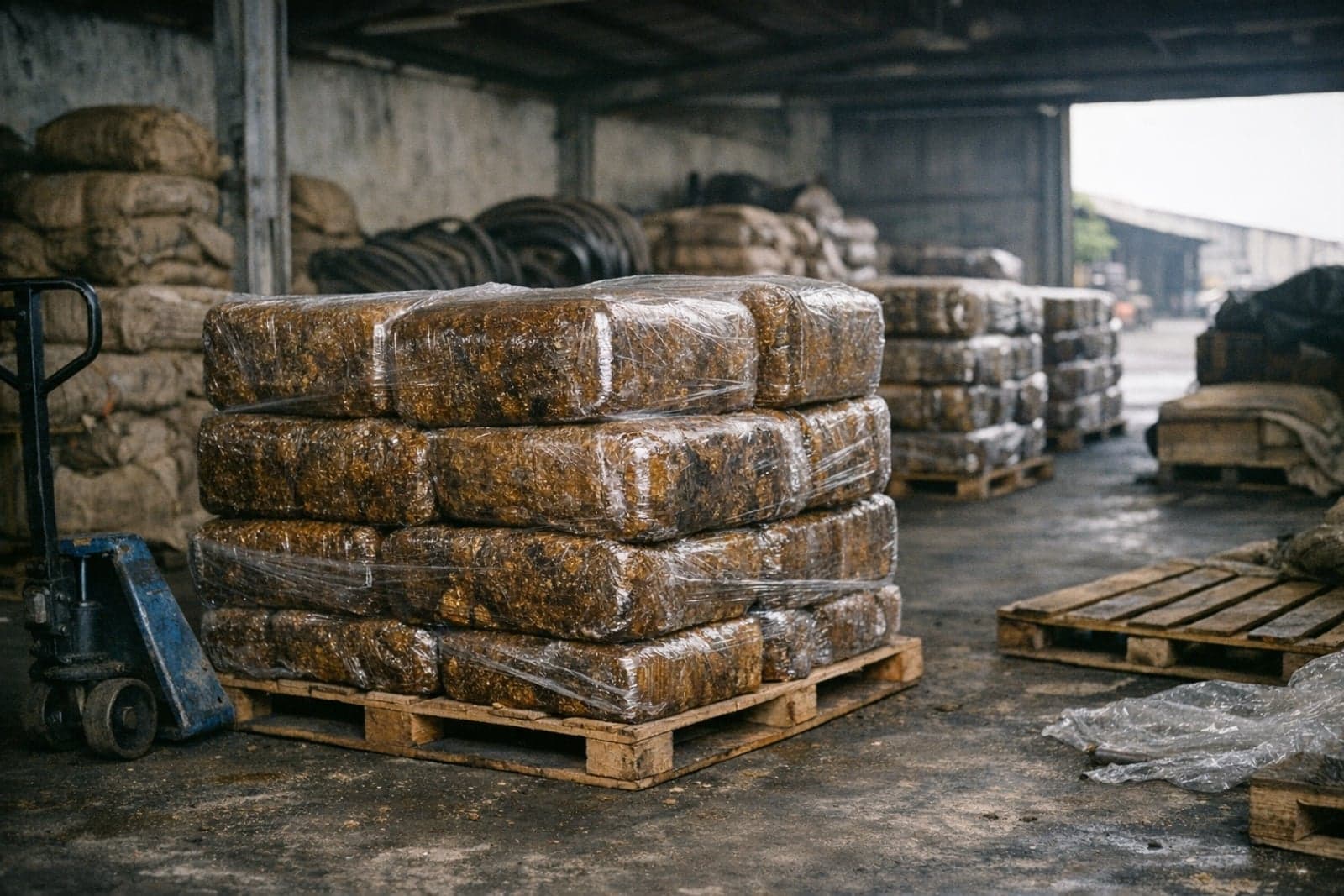
Featured product
SIR 20 TSR Tire Grade
Workhorse Indonesian TSR bale with dirt at or below 0.16%, PRI at or above 50, Mooney ML 65 plus or minus 5.
SNI 1903 · ISO 9001 · ISO 14001 · ISO 45001 · Halal (BPJPH)
View specificationsGrade selection is still a technical decision. SIR 20 is normally evaluated by buyers that need a tire-grade TSR bale, with dirt content at or below 0.16% and Mooney viscosity ML (1+4) 100 °C of 65 ± 5. SIR 10 gives a lower dirt limit at or below 0.10% and Mooney 61 ± 5. SIR CV 60 is selected where constant viscosity control matters, with Mooney 60 ± 5. Light-color buyers may compare SIR 3L or SIR 5, while sheet buyers can review RSS smoked sheet rubber where visual grade and Green Book classification are part of the purchase decision.
Latex is a different buying file because it is liquid cargo. Our HA Latex 60% DRC is specified at 60.0% ± 0.5% dry rubber content, with ammonia at 0.6–0.8% on total weight. For dipped goods buyers, the EUDR file still concerns rubber origin, but receiving control also has to address liquid handling, flexitank or drum condition, and latex stability.
If your team is still deciding between TSR, RSS, and latex for an EU programme, review our natural rubber products before requesting a quotation.
What EUDR evidence should an EU buyer request before quotation?
The buyer should request EUDR evidence before treating a quotation as ready for purchase. At minimum, the request should define plot geolocation, production period, legality evidence, supplier lot reference, and the document format needed by the EU operator.
Regulation (EU) 2023/1115 Article 9 requires operators to collect information including country of production, geolocation of all plots of land where the relevant commodities were produced, date or time range of production, supplier details, buyer details, and adequately conclusive and verifiable information that the product is deforestation-free and legal. Regulation (EU) 2023/1115 Article 2 defines geolocation using latitude and longitude coordinates, with polygon requirements for plots of land above the size threshold stated in the Regulation.
For Indonesian rubber, the buyer should be precise about the evidence format. A broad request for “EUDR documents” is not enough. Ask whether the EU operator needs coordinates in a spreadsheet, polygon files, farm or smallholder references, a production period matched to the rubber lot, legality records, or a supplier declaration mapped to the operator’s internal template.
The production period matters because natural rubber is collected, processed, packed, and shipped across separate steps. A finished SIR bale or RSS sheet lot should be connected to a time window that the EU operator can assess. For latex, the time window should also fit the buyer’s receiving and storage plan because latex quality checks such as DRC, ammonia, MST, and VFA are handled separately from EUDR traceability.
Buyers should also decide how they will handle mixed-origin risk. If a shipment contains rubber from multiple plots or collection sources, the EU operator’s file needs to identify all relevant plots covered by the product. A clean factory certificate does not solve a missing plot file.
At quotation stage, send us the grade, destination port, required shipment month, and the EUDR data template your EU operator uses through our contact page. That lets the discussion start with the evidence format, not only the price line.
What is the MOQ and price basis for Indonesian rubber to the EU?
Our minimum order is 19.6 MT for solid rubber grades in 1 × 20 ft FCL and 20 MT for HA latex by flexitank or 205 L drums. Price depends on grade, packing, Incoterm, volume, shipment month, freight route, and the market basis used for the quotation.
For TSR and RSS, the shipment unit is normally built around container loading. Our TSR bales are packed as 35 kg bales, with shrink-wrapped pallet packing used for the listed TSR grades. Our RSS products are supplied as 33.33 kg sheets in wooden crates or palletised bundles depending on grade. For HA latex, the buyer chooses between a 20 MT flexitank and 205 L steel drums.
Lead time should be checked grade by grade. Our SIR 20 and SIR 10 lead time is 2–3 weeks FOB Jakarta or Belawan, while SIR 3L and SIR 5 are 3–4 weeks FOB Jakarta or Belawan. RSS 3 is 2–3 weeks FOB Belawan or Palembang, while RSS 1 is 3–4 weeks with limited seasonal volume. HA Latex 60 is 2–3 weeks FOB Belawan or Jakarta. We offer FOB, CIF, and CFR on the listed products, so the named port must be clear before two offers can be compared.
We do not publish a spot price in this guide because rubber prices move and would become stale. For TSR, buyers commonly see quotations built from a natural rubber market basis such as Singapore Exchange SICOM TSR 20 futures, plus or minus an origin differential, grade adjustment, packing cost, freight if quoted under CIF or CFR, and any EUDR-related documentation work agreed for the order. RSS and latex pricing may use different physical market references, so the buyer should ask the seller to state the price basis rather than compare only the final number.
For EU-bound orders, price comparison should include the cost of failure. A cheaper cargo without usable EUDR evidence can be more expensive than a higher offer that matches the operator’s due diligence format. Ask for the quotation to state grade, HS code, packing, Incoterm, named port, shipment window, and the EUDR evidence package expected before shipment.
Are SNI, ISO, Halal, or Green Book certificates enough for EUDR?
No. Quality, management-system, Halal, and grade certificates can support a supplier file, but they do not replace the EUDR due diligence statement required by the EU operator.
Our TSR grades are supplied with SNI 1903, ISO 9001, ISO 14001, and Halal from BPJPH, with ISO 45001 also listed for SIR 3L, SIR 5, SIR 10, and SIR 20. Our RSS grades are supplied with Green Book grade reference, ISO 9001, ISO 14001, and Halal from BPJPH. Our HA Latex 60 is supplied with ISO 9001, ISO 14001, and Halal from BPJPH.
Those documents answer different questions. SNI 1903 is relevant to Indonesian TSR grade control. Green Book grading is relevant to RSS sheet classification. ISO documents relate to management systems. Halal from BPJPH addresses Halal status. EUDR asks whether the rubber is deforestation-free, legal in the country of production, and covered by a due diligence statement.
A practical EU buyer file should keep these document types separate. Put product quality certificates in the technical file. Put packing, invoice, bill of lading, certificate of origin if required, and insurance where applicable in the shipping file. Put plot data, legality evidence, supplier declarations, risk assessment notes, and due diligence statement references in the EUDR file.
This separation helps when different teams review the same order. Procurement checks commercial terms. QA checks grade values. Logistics checks shipment documents. The EU compliance team checks EUDR evidence. If all documents are treated as one generic “certificate pack,” gaps are harder to spot before the vessel sails.
How should a purchase order be written for EU-bound Indonesian rubber?
A purchase order for EU-bound Indonesian rubber should identify the product, grade, HS code, packing, Incoterm, named port, shipment window, required documents, and EUDR evidence format. The PO should make clear which party is responsible for each pre-shipment document and which EU entity handles the due diligence statement.
Start with the rubber grade. For example, a tire manufacturer buying TSR may specify Indonesian TSR bales by grade, Mooney target, dirt limit, packing, and shipment term. A sheet buyer should specify RSS grade and packing format. A latex buyer should state flexitank or drums and the receiving constraints at destination.
Then add the EUDR section as a separate PO clause or annex. The clause should name the data fields required by the EU operator: plot geolocation, country of production, production period, supplier identity, lot reference, legality evidence, and any declaration wording the operator needs before filing. If the operator uses a standard template, attach it before the quotation is finalised.
The PO should also state timing. EUDR evidence should be reviewed before shipment release, not after documents are already issued. If third-party inspection is required, the inspection scope should say whether the inspector checks packing, marks, sampling, seal numbers, document consistency, or only physical loading condition.
Finally, align the commercial and compliance teams before issuing the order. A rubber shipment to the EU now has two acceptance tests: the material must fit the plant, and the evidence must fit the EUDR process. Send your target grade, destination port, shipment month, and EU operator data requirements through our contact page so we can respond against the buying file you actually need.