Indonesian HA Latex 60 Specs for Dipped Goods
Indonesian HA Latex 60 Specs for dipped goods buyers, with DRC, ammonia, MST, packing, MOQ, and order checks before quotation.
By Budi SantosoDirector of Rubber TradingTwelve years placing Indonesian TSR and RSS programmes with tire makers and industrial compounders across Asia, Europe, and North America.
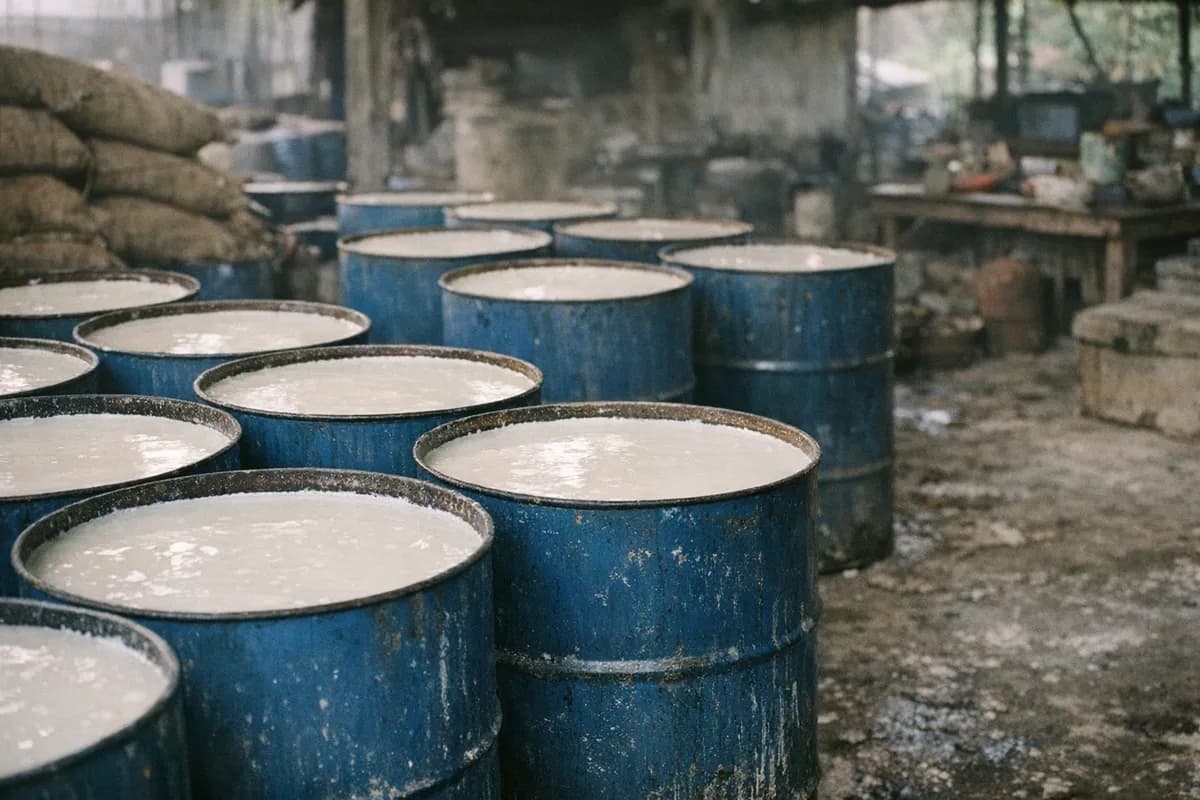
HA Latex 60 is bought on process stability, not on the product name alone. For dipped goods plants, the purchase decision usually turns on dry rubber content, ammonia preservation, mechanical stability, VFA control, packing choice, and whether the shipment format fits the buyer’s storage and compounding system.
We supply Indonesian high-ammonia natural rubber latex concentrate for export buyers making dipped goods such as gloves, condoms, balloons, foam items, and thin-wall rubber products. This guide explains how we specify HA Latex 60, how a buyer should read the lab values, and what to confirm before issuing a purchase order.
What Indonesian HA Latex 60 specs should a dipped goods buyer request?
A dipped goods buyer should request the exact latex grade, DRC, ammonia content, mechanical stability, VFA limit, packing format, shipment term, loading port, and documents before asking for a firm price. The grade name alone is not enough because two latex offers can carry the same “60%” label but behave differently in storage or on a dipping line.
For our HA Latex 60% DRC, the specification is: dry rubber content 60.0% ± 0.5%, ammonia content 0.6–0.8% NH3 on total weight, mechanical stability time min. 650 s, VFA ≤ 0.06%, minimum order 20 MT by flexitank or 205 L drums, packing in 205 L steel drums or 20 MT flexitank, lead time 2–3 weeks FOB Belawan or Jakarta, certifications ISO 9001, ISO 14001, and Halal from BPJPH, Incoterms FOB, CIF, and CFR, and HS code 4001.10.
Featured product
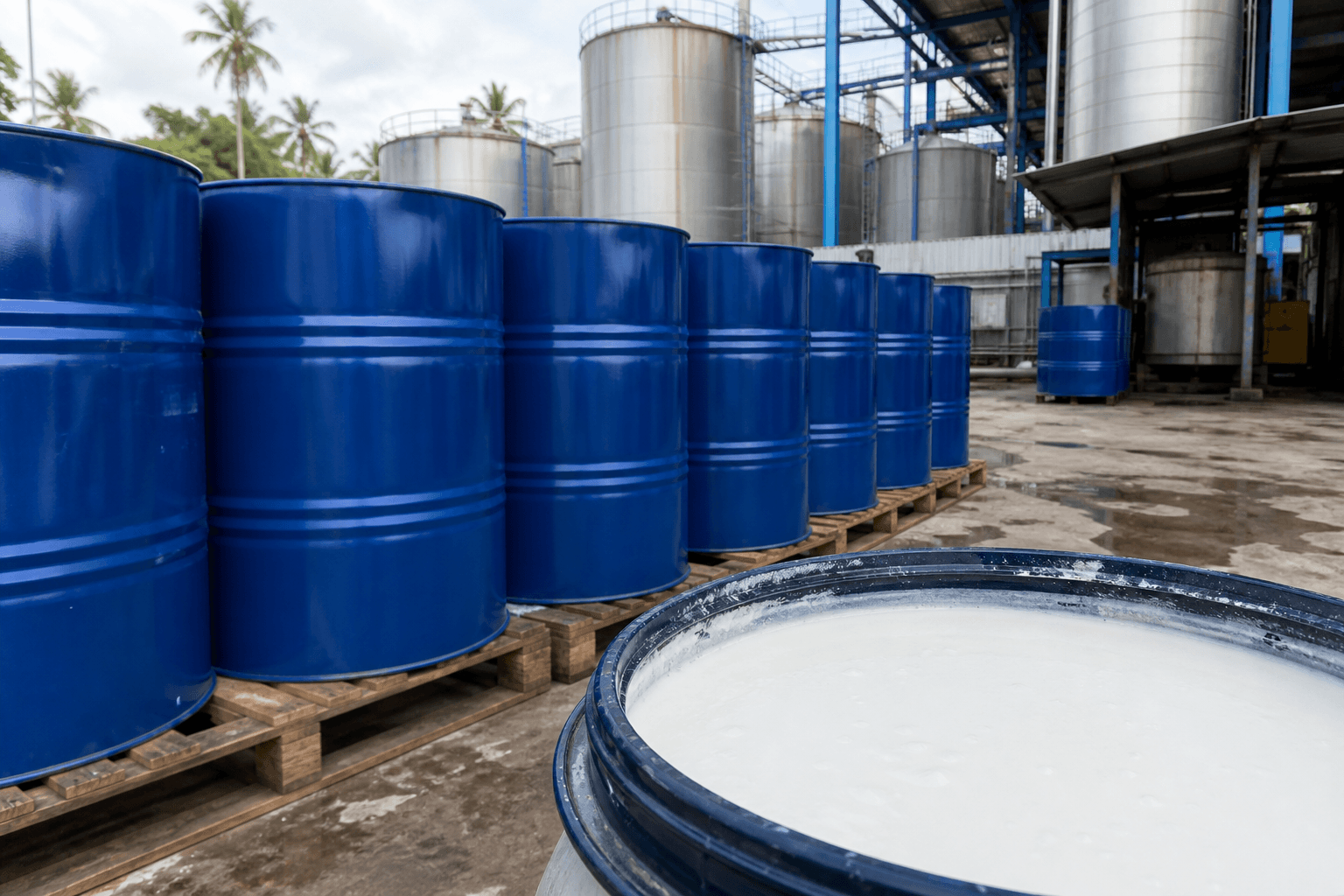
HA Latex 60% DRC
High-ammonia latex concentrate at 60.0% DRC with MST minimum 650 s for dipped goods and gloves.
ISO 9001 · ISO 14001 · Halal (BPJPH)
View specificationsThat paragraph is the commercial starting point. Your technical team should then connect each value to its use in the plant. DRC affects formulation math and transport economics. Ammonia content affects preservation, odour handling, and downstream compounding adjustments. Mechanical stability matters when latex is pumped, filtered, stirred, or transferred. VFA is a quality signal linked to latex freshness and preservation control.
For dipped goods, the risk is not only receiving latex outside the agreed number. The larger risk is receiving latex that looks acceptable at arrival but destabilises during handling. Ask for the certificate of analysis to show the values agreed in the PO, and make sure the lab sample identity connects to the shipment batch, drum lot, or flexitank lot.
If your team is still comparing latex formats for thin-wall products, our dipped goods latex category gives the product context before you request a quote.
Why do DRC, ammonia, MST, and VFA matter on a dipping line?
DRC tells the buyer how much dry rubber is in the latex concentrate, while ammonia, MST, and VFA show how well the concentrate is preserved and how likely it is to remain stable during handling. These values should be reviewed together because a strong DRC number does not make an unstable latex acceptable.
Dry rubber content is the first buying number because it controls how much rubber solids the plant receives per tonne of liquid cargo. A latex at 60% DRC is not used only as delivered; it is commonly compounded, diluted, matured, filtered, and adjusted depending on the dipping process. If the DRC differs from the value used by your formulation team, the plant may need to correct solids, viscosity, chemical dosage, or line settings.
Ammonia is the preservation system in high-ammonia latex. In buying terms, the question is not “does it contain ammonia?” but whether the ammonia is within the agreed range for the grade. Too little preservation can create stability risk during storage and transit. Too much can affect odour management, pH-related compounding behaviour, and plant handling procedures.
Mechanical stability time is especially relevant for buyers with transfer pumps, storage circulation, filtration, or long piping runs. Latex that is mechanically weak can form coagulum when it is stressed. That can block filters, create specks on dipped films, increase rejects, or force extra tank cleaning. The International Organization for Standardization publishes ISO 35 for determination of mechanical stability of natural rubber latex concentrate, so buyers can name a recognised test basis in their QA file.
VFA, or volatile fatty acids, is a warning signal for biological or preservation issues. A low VFA limit helps buyers screen out latex that may have aged poorly before concentration or during storage. In practical receiving inspection, VFA should be read beside odour, pH if tested by the buyer, visible coagulum, sediment, and the certificate of analysis.
For a buyer, these values should not sit in a file that only procurement sees. They belong in the process handover to compounding, QA, and receiving. When a latex tank is rejected, delayed, diluted incorrectly, or mixed with an old heel in storage, the cost usually appears in production downtime rather than in the purchase price line.
What is the MOQ and price basis for Indonesian HA Latex 60?
Our minimum order for HA Latex 60 is 20 MT, supplied by flexitank or 205 L steel drums. Price depends on grade, packing format, Incoterm, volume, season, freight route, and the natural rubber latex market basis used at the time of quotation.
We do not publish a daily price in a sourcing guide because it would be stale by the time a buyer uses it. For latex concentrate, a workable quotation normally references a current natural rubber latex market basis, an origin differential, the packing choice, the shipment term, and any freight component if the buyer requests CIF or CFR. A buyer comparing offers should check whether the quotation is FOB Indonesia, CIF destination port, or CFR destination port before treating two numbers as equal.
Packing changes the cost structure. A 20 MT flexitank is usually chosen when the buyer has bulk receiving, tank storage, and a discharge system ready at destination. Drums are more practical when the buyer needs smaller drawdown, batch separation, easier sampling by lot, or delivery to a site without bulk liquid infrastructure. The drum option can also help during supplier qualification because the buyer can segregate material before committing larger receiving capacity.
Season also matters because latex is an agricultural raw material. Rainfall, tapping conditions, field collection, and factory scheduling can affect availability. The effect is not the same as buying a fixed synthetic input where the production base is fully industrial. For planning, we prefer that buyers share target shipment month, annual programme volume, preferred packing, and destination port before requesting a price.
Send us your destination port, packing preference, expected shipment month, and trial or programme volume through our contact page for a current quotation.
Should dipped goods buyers choose flexitank or 205 L drums?
Choose flexitank when your plant is ready for bulk liquid receiving and the order is intended for continuous production. Choose 205 L drums when you need tighter batch separation, smaller issue quantities, or easier warehouse handling during qualification.
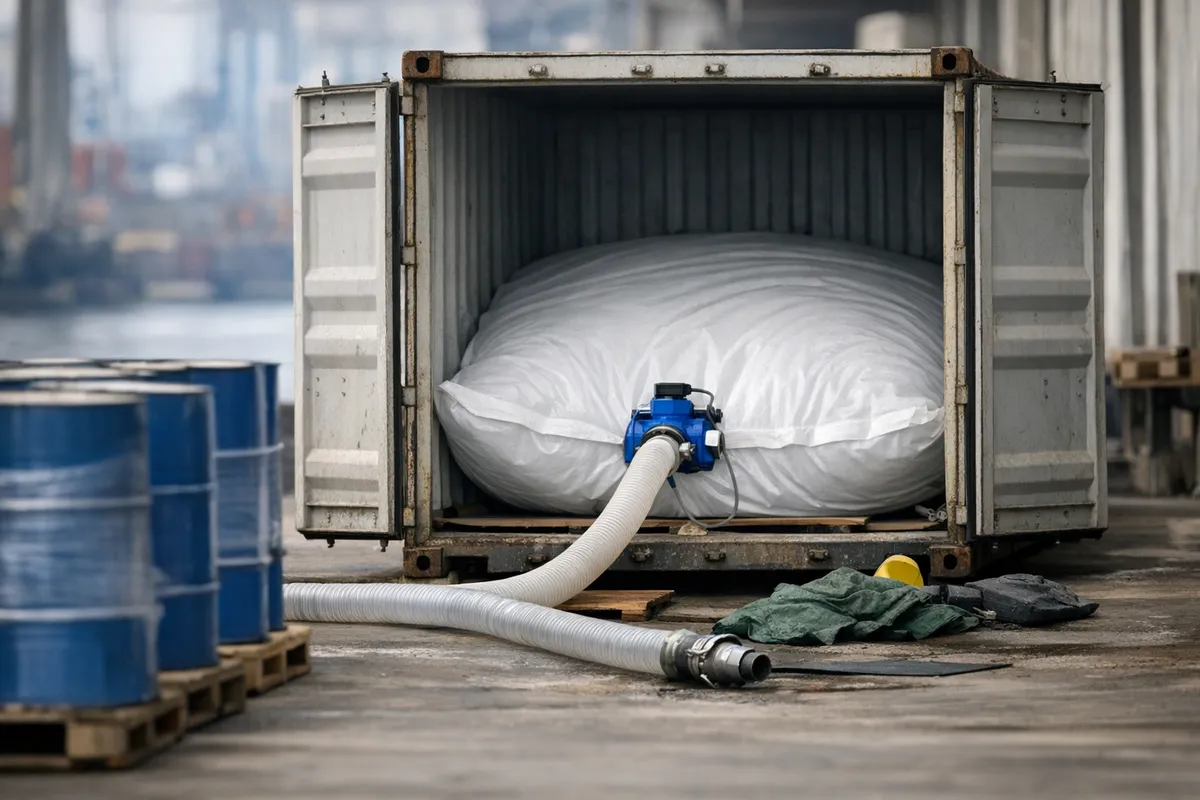
Flexitank supply is efficient for a buyer that can unload promptly into a clean tank. The receiving tank must be ready before the container arrives. Hoses, pumps, seals, filters, and transfer lines should be clean because latex can pick up coagulum or contamination during discharge. The receiving team should check container condition, flexitank integrity, valve condition, seal numbers, and any sign of leakage before unloading starts.
Drums are slower to handle, but they give the buyer more control over segregation. If a plant is testing a new origin, drums can be sampled, opened, consumed, and traced in smaller lots. This helps QA connect dipped film behaviour to a specific incoming batch. Drums also reduce the risk of putting the full shipment into one storage tank before the buyer has completed internal checks.
The trade-off is handling discipline. Drums must be stored away from direct heat, rain, and contamination. They should be rolled or mixed only under the buyer’s approved latex handling procedure. Rough handling, dirty suction pipes, open bungs, or poor resealing can create contamination after the supplier’s shipment has already passed export checks.
Buyers with both receiving systems often use drums for first qualification, then move to flexitank once the plant has accepted the supplier, test values, discharge process, and internal storage routine. If you are comparing pack formats, review our broader latex concentrate page before finalising the PO.
How should Indonesian HA Latex 60 be inspected before and after shipment?
Inspect HA Latex 60 by linking the commercial lot, certificate of analysis, packing marks, seal details, and receiving sample into one traceable file. The buyer should not rely only on a supplier’s product name or a shipment photograph.
Before shipment, the PO should state the grade, the agreed values, packing, Incoterm, loading port, shipment window, and documents required. If you use a third-party inspector, the inspection booking should state whether sampling is from drums, bulk tank, or flexitank filling point. It should also state how retained samples are sealed, labelled, stored, and shared.
At loading, check that the packing format matches the PO. For drums, the inspector should record drum condition, closure condition, labels or marks, pallet or loading condition if applicable, and any leakage. For flexitank, the inspector should record container suitability, flexitank installation condition, valve protection, seal numbers, and gross loading discipline. A clean certificate loses value if the cargo is loaded into unsuitable equipment.
At arrival, receiving inspection should begin before unloading. Check container walls, floor, doors, odour, leakage, heat exposure signs, and seal continuity. For drums, inspect the outer rows and a sample of internal rows if the container is unloaded into a warehouse. For flexitank, check the valve area and any bulging, abrasion, or wet areas before connecting discharge equipment.
Sampling should follow the buyer’s QA procedure. The receiving sample should be labelled with supplier, product, shipment date, container number, packing type, lot reference, sampling point, and sampler name. Test results should be compared against the PO and the certificate of analysis, not against a vague “latex 60” description.
If your plant uses solid natural rubber alongside latex, keep the purchase files separate. A bale grade such as SIR CV 60 Constant Viscosity TSR is specified around Mooney viscosity and bale handling, while HA Latex 60 is a liquid concentrate where DRC, ammonia, MST, VFA, and receiving cleanliness drive the buying decision.
What should a purchase order for HA Latex 60 include?
A purchase order for HA Latex 60 should be written so the supplier, freight forwarder, inspector, lab, and receiving team can all identify the same cargo. The cleaner the PO, the fewer disputes occur when the shipment is tested or unloaded.
Start with the exact product name and origin. Then name the agreed specification values, but do not use loose wording such as “standard latex” or “normal HA quality.” State the packing choice clearly because the operational plan is different for drums and flexitank. Add Incoterm, named loading port or destination port where relevant, target shipment period, required documents, and who arranges inspection if inspection is needed.
The PO should also define what happens if a value is outside the agreed range. Some buyers require replacement, rejection, allowance discussion, or joint retesting. Whatever the process is, put it in writing before shipment. It is much harder to settle a latex claim after the cargo has been transferred into a plant tank or mixed with existing stock.
For first orders, we recommend aligning procurement, QA, compounding, and warehouse teams before the PO is issued. Procurement may focus on price and shipment term. QA needs test values and sampling. Production needs process stability. Warehouse needs packing and discharge details. HA Latex 60 only works as a supply programme when those four views match the same purchase file.
For a current offer on Indonesian HA Latex 60, send the specification you use at your plant, destination port, packing preference, and required shipment month through our contact page.