Indonesian RSS 1 vs RSS 3 Smoked Sheet Guide
This Indonesian RSS 1 vs RSS 3 smoked sheet comparison shows how to match grade limits and lead time before requesting a quote.
By Budi SantosoDirector of Rubber TradingTwelve years placing Indonesian TSR and RSS programmes with tire makers and industrial compounders across Asia, Europe, and North America.
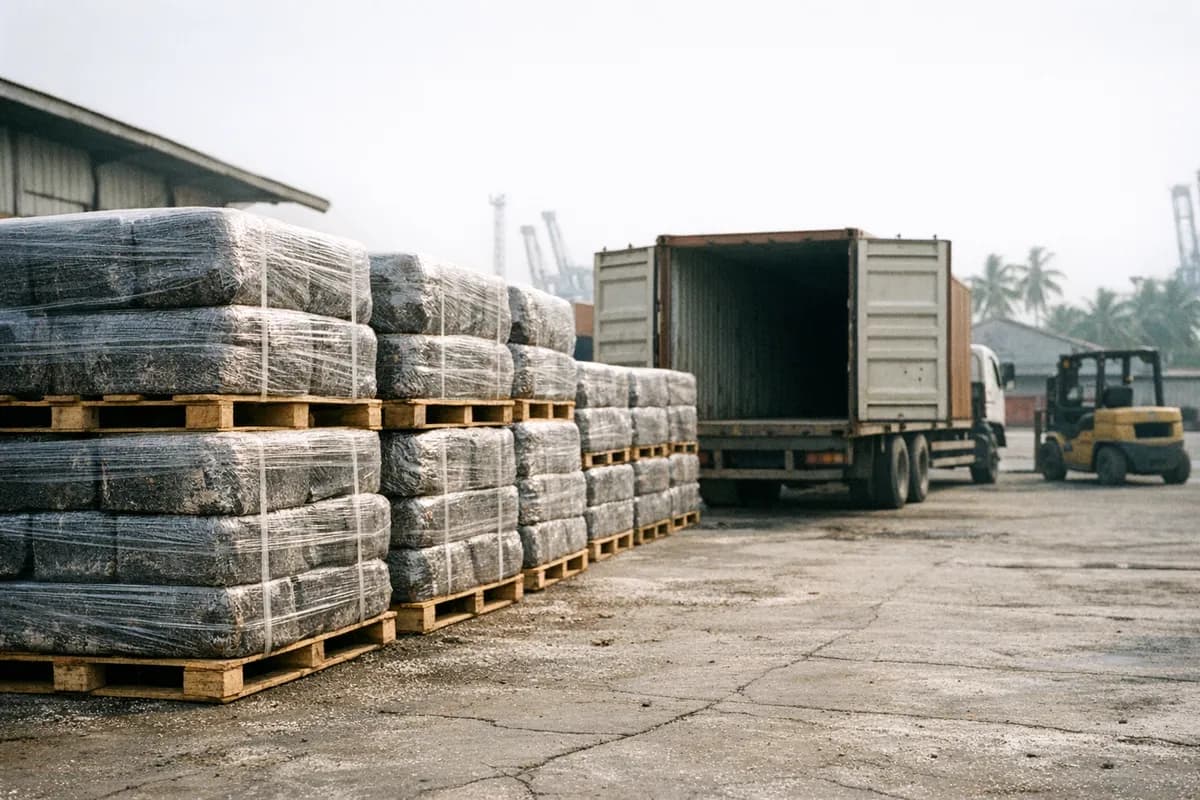
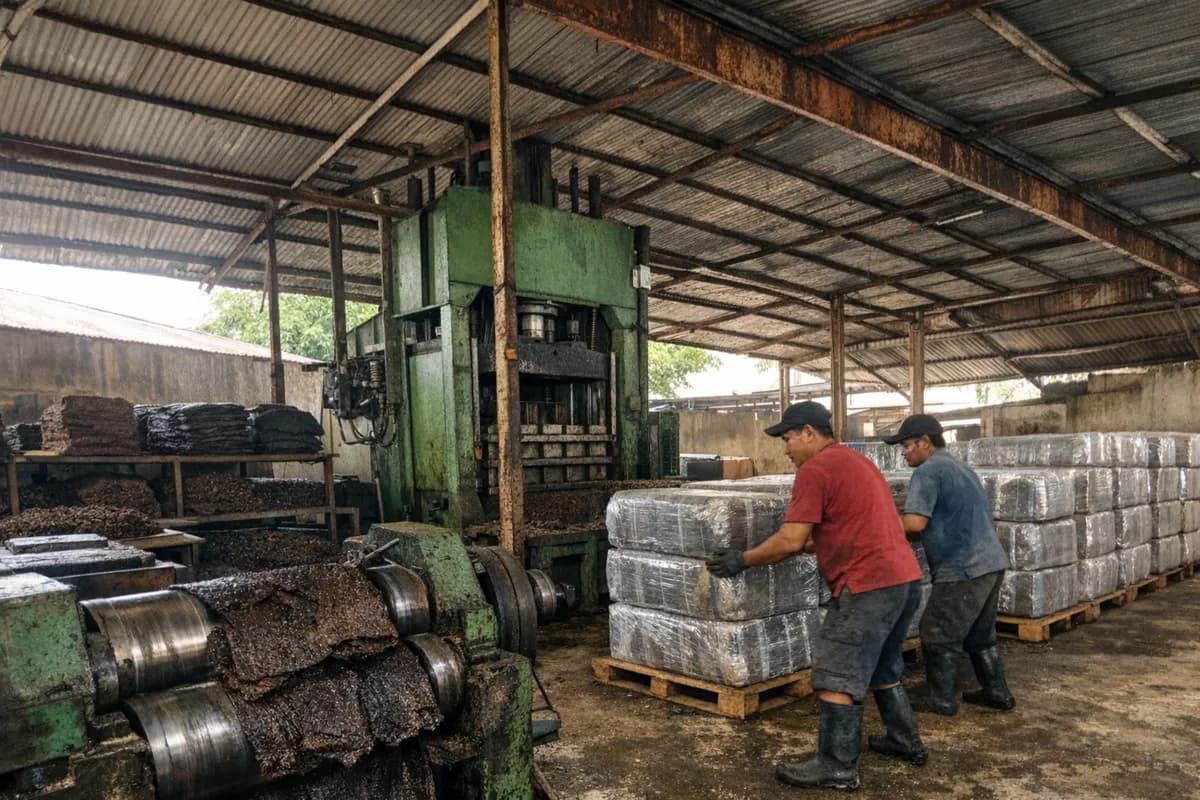
RSS 1 and RSS 3 are both ribbed smoked sheet grades, but they are not interchangeable in a purchase order. RSS 1 is the tighter selection for buyers who need cleaner sheet and higher ageing resistance. RSS 3 is the practical tire-grade sheet for buyers who can accept wider visual and lab limits.
We supply Indonesian RSS sheet for export buyers who need Green Book grade language tied to export packing, shipment timing, and checkable acceptance values. This guide compares Indonesian RSS 1 and RSS 3 from a sourcing desk view: how to evaluate the grade, how to write the order, and what to inspect before shipment.
What is the practical difference between Indonesian RSS 1 and RSS 3?
RSS 1 is the cleaner and tighter Green Book smoked sheet grade in our export offer, while RSS 3 is the tire-grade smoked sheet option with wider limits. The buying decision should be based on the compound requirement, not only the grade name.
| Field | RSS 1 Premium Smoked Sheet | RSS 3 Smoked Sheet Tire Grade |
|---|---|---|
| Sheet grade | RSS 1 (Green Book) | RSS 3 (Green Book) |
| Dirt content | ≤ 0.05% w/w | ≤ 0.20% w/w |
| Ash content | ≤ 0.50% w/w | ≤ 1.00% w/w |
| Volatile matter | ≤ 0.80% w/w | ≤ 0.80% w/w |
| Nitrogen | ≤ 0.60% w/w | ≤ 0.60% w/w |
| PRI | ≥ 60 | ≥ 50 |
| Minimum order | 19.6 MT, 1 × 20 ft FCL | 19.6 MT, 1 × 20 ft FCL |
| Packing | 33.33 kg sheets, wooden crates | 33.33 kg sheets, wooden crates or palletised bundles |
| Lead time | 3-4 weeks, limited seasonal volume | 2-3 weeks FOB Belawan or Palembang |
| Certifications | Green Book (RSS), ISO 9001, ISO 14001, Halal (BPJPH) | Green Book (RSS), ISO 9001, ISO 14001, Halal (BPJPH) |
| Incoterms | FOB, CIF, CFR | FOB, CIF, CFR |
| HS code | 4001.21 | 4001.21 |
The largest technical gap is in dirt and ash. For buyers, dirt is the most direct contamination signal. Ash shows inorganic residue. PRI separates the ageing requirement: RSS 1 carries the higher requirement in our offer.
RSS 3 is often the more available smoked sheet choice for tire and general rubber goods buyers. RSS 1 needs a stricter selection of clean, evenly dried sheets, so volume can be seasonally limited. If your plant can qualify RSS 3, it may support steadier procurement timing. If your specification calls for RSS 1, downgrading the grade to shorten lead time should be cleared by your technical team before the PO is issued.
For current product details, review our RSS 1 Premium Smoked Sheet and RSS 3 Smoked Sheet Tire Grade pages before sending a request.
Featured product
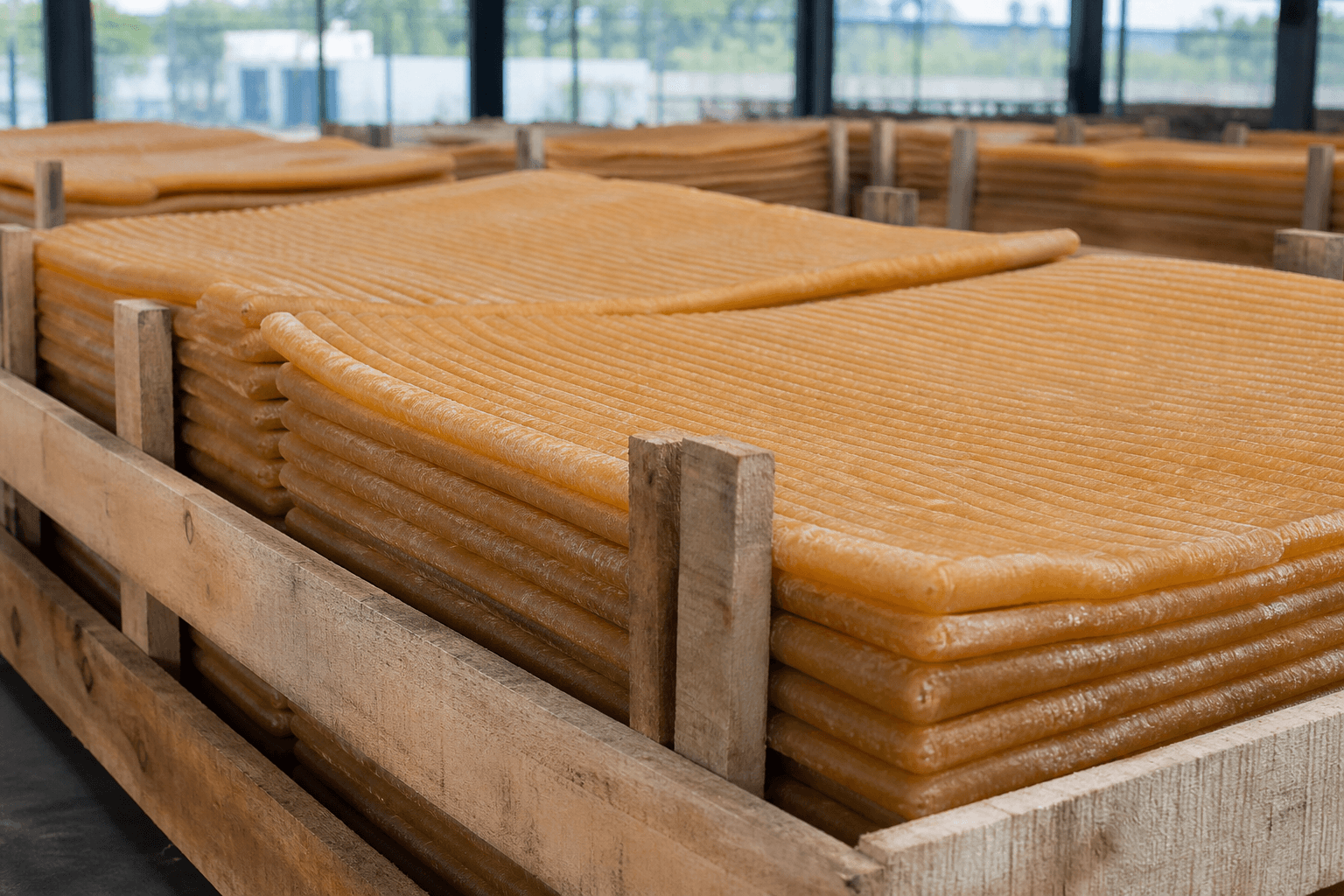
RSS 1 Premium Smoked Sheet
Green Book RSS 1 with dirt at or below 0.05%, ash at or below 0.50%, PRI at or above 60 for industrial compounds.
Green Book (RSS) · ISO 9001 · ISO 14001 · Halal (BPJPH)
View specifications
Which grade should a buyer specify for each compound?
Specify RSS 1 when your compound needs tighter contamination limits and higher PRI. Specify RSS 3 when your formulation is approved for tire-grade smoked sheet and the priority is practical availability with controlled Green Book grade language.
RSS 1 is the better fit where visible sheet cleanliness, lower ash, and higher PRI are part of the plant acceptance file. That can apply to industrial compounds, engineered rubber goods, or specialty applications where contamination complaints are costly. The buyer should still test the rubber in the compound, because sheet grade does not replace in-house mixing validation.
RSS 3 is a practical choice for tire-related use and general rubber goods where the buyer already accepts the wider dirt and ash limits. It is not a failed RSS 1. It is a different grade target with its own acceptance values. In a sourcing file, RSS 3 should be written as RSS 3, not as “RSS sheet” or “RSS equivalent.”
A common buying error is to request RSS 1 in the first email, then approve RSS 3 verbally when shipment timing becomes tight. That creates a documentation gap. The contract, invoice, packing list, certificate, inspection report, and goods should all carry the same grade. If your technical department can accept either grade, write the alternative grade rule into the inquiry and PO from the beginning.
Buyers comparing only smoked sheet options can also use our smoked sheet export collection to keep the grade choice inside one product family.
What are the MOQ and price drivers for Indonesian RSS 1 vs RSS 3?
Our minimum order for both RSS 1 and RSS 3 is 19.6 MT, equal to one 20 ft full-container load. Price is driven by grade, packing, Incoterm, order volume, seasonal availability, freight route, and the market benchmark used for the quotation.
We do not quote a static price in an article because natural rubber prices move. A current quotation is usually built from a market reference such as SGX SICOM RSS 3, an origin differential, the confirmed grade, export packing, shipment timing, and the requested Incoterm. RSS 1 normally needs separate attention because the cleaner selection and limited seasonal volume can affect availability.
Incoterm choice changes the quote structure. Under FOB, the buyer normally compares the rubber price to their own freight and insurance arrangements. Under CFR or CIF, the ocean freight component is included in the offer according to the agreed destination port and shipping terms. A buyer comparing suppliers should not compare an FOB number from one offer against a CIF number from another without separating freight and insurance.
Packing also matters. RSS 3 can be supplied in wooden crates or palletised bundles under our offer, while RSS 1 is supplied in wooden crates. If your warehouse has handling limits, container unloading rules, or fumigation requirements for wood packaging at destination, state those conditions in the inquiry.
For a current quote, send the grade, volume, destination port, target shipment month, and required Incoterm through our contact page. If your QA team has a fixed lab acceptance format, include it with the inquiry so we can align the offer before the order is drafted.
How should buyers inspect smoked sheet before shipment?
Inspect RSS sheet by combining visual grading, packing checks, lot identification, and lab testing against the agreed limits. Visual inspection screens obvious defects, while lab results confirm the values written into the contract.
Start with the lot identity. The inspector should match the grade, net weight, packing type, marks, and container plan against the proforma invoice or purchase order. If the booking says RSS 1, the warehouse marks and inspection file should not show RSS 3.
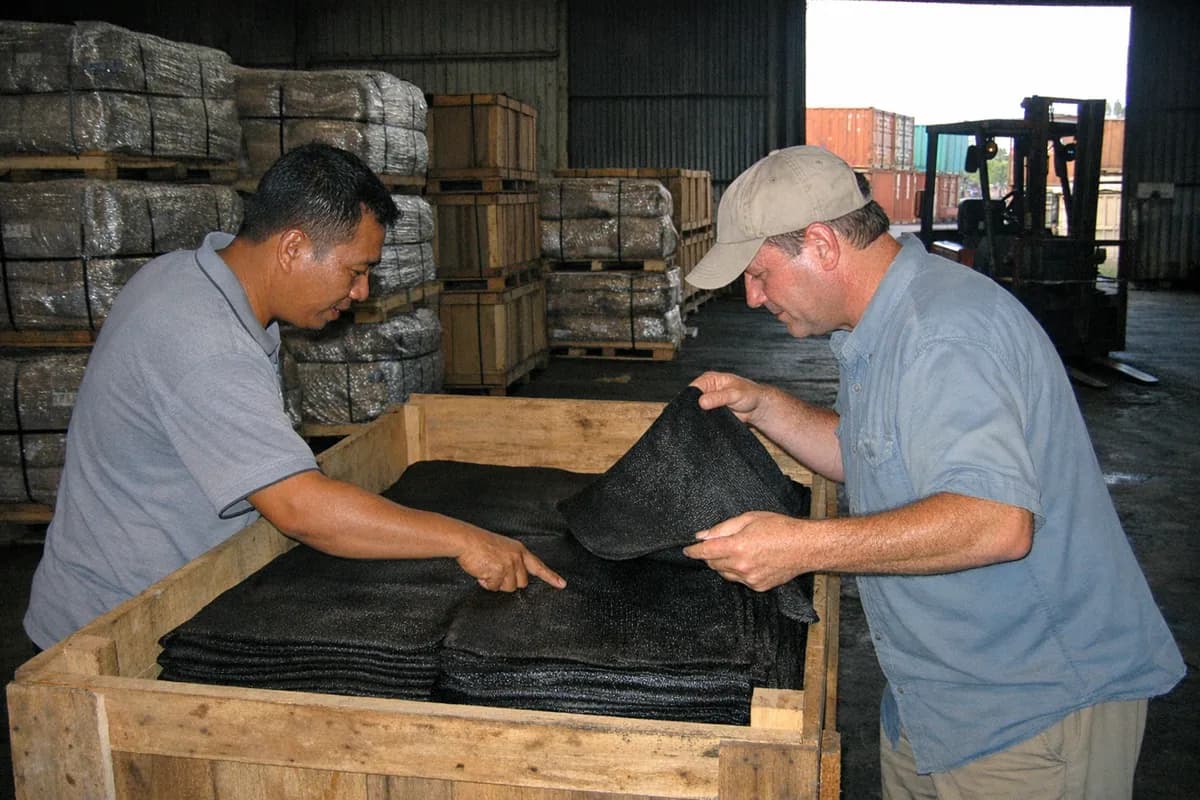
Then inspect opened crates or bundles from more than one position in the lot. The outer face is not enough. Ask to view sheets from top, middle, and inner positions where access is practical. Smoked sheet can look clean on the exposed side while hidden layers show wetness, mould, sticking, or handling contamination.
The main defects to record are wet patches, mould, heavy soot, burnt areas, oil marks, bark, sand, bubbles, uneven sheet thickness, stuck sheets, torn packing, and water staining. A useful inspection photo shows the defect, the lot mark, and the packing unit. A close-up without identification is weak evidence in a claim.
Lab tests should match the agreed acceptance values. The International Organization for Standardization publishes ISO 249 for dirt content in raw natural rubber, ISO 247 for ash determination in raw rubber, ISO 248-1 for volatile-matter determination in raw rubber, ISO 2930 for plasticity retention index in raw natural rubber, and ISO 1656 for nitrogen determination in raw natural rubber and latex. If your company uses equivalent accredited methods, name them in the PO rather than leaving the lab basis open.
Do not rely on arrival inspection alone when the rubber is needed for a scheduled production run. Pre-shipment inspection gives the buyer a chance to stop or correct a lot before the container leaves origin. Arrival inspection still matters because container condensation, water ingress, or handling damage can occur after loading.
What should an RSS 1 or RSS 3 purchase order include?
The purchase order should name the grade, origin, packing, quantity, Incoterm, shipment window, inspection point, lab acceptance values, document requirements, and rejection process. A clear PO turns the grade discussion into a working shipment file.
Use exact grade wording. Write “Indonesian RSS 1 (Green Book)” or “Indonesian RSS 3 (Green Book)” and avoid broad terms such as “smoked sheet rubber” without grade. State whether the order is fixed to one grade or whether the buyer will accept a substitution with written approval.
Quantity should be written in metric tons and container basis. Since our MOQ is one 20 ft FCL, buyers planning a trial should confirm whether their plant can receive and consume that volume. For repeat supply, add the forecast by month so availability can be checked before the shipment window becomes tight.
The packing line should match your warehouse handling method. If your receiving team needs crates, do not leave the line as “standard export packing.” If palletised bundles are acceptable for RSS 3, state that clearly. For wooden crates, ask your import broker what destination rules apply to wood packaging before the shipment is booked.
Document control is part of grade control. The commercial invoice, packing list, certificate, bill of lading instruction, and inspection report should show consistent grade, net weight, HS code, shipment port, and Incoterm. We cover this file in more detail in our Indonesian RSS sheet export documents checklist.
The best sourcing result is not simply choosing RSS 1 or RSS 3. It is choosing the grade your compound can accept, writing the acceptance values into the order, checking the lot before shipment, and keeping the shipping documents consistent with the rubber loaded.